Let’s be real, every SaaS CEO has been there, hoping that generating training will have an impact while avoiding the costs of custom eLearning development. You’re staring at your customer churn rates, watching users struggle with your platform, and thinking, “Maybe we should just buy one of those off-the-shelf training courses and call it a day.” But here’s the thing: the landscape of custom eLearning development has evolved dramatically, and the old “one-size-fits-all” approach might be costing you more than you think.
The question isn’t really whether generic training programs are dead (spoiler alert: they’re not), but rather when custom eLearning development makes the difference between customers who thrive and customers who churn.
The Current State of Custom eLearning Development in 2026
Here’s what’s happening in the training world right now: organizations are getting smarter about mixing both approaches. We’re seeing a hybrid model emerge where companies use off-the-shelf solutions for basic compliance and foundational skills, then layer in custom eLearning development for the stuff that really moves the needle.
The numbers don’t lie. Companies investing in custom eLearning development are seeing retention rates improve by up to 60%, while engagement levels jump 42% higher compared to generic formats. Why? Because when training reflects your actual workflows, your real customer scenarios, and your unique value proposition, learners actually pay attention.
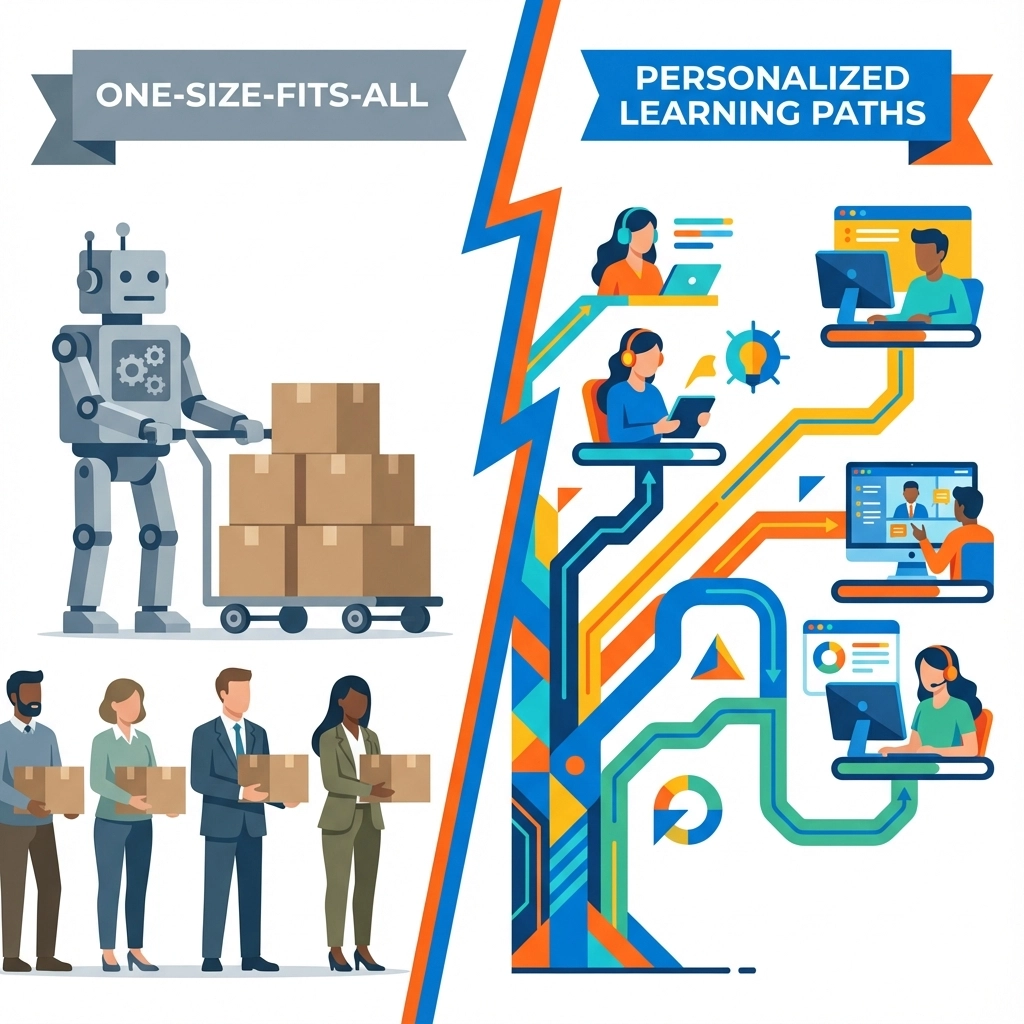
Think about it this way: would Netflix recommend the same show to everyone? Of course not. Yet somehow, we expect generic training modules to work for every industry, every role, and every company culture. That’s where custom eLearning development comes in, it’s like having a personal trainer for your training programs.
Why Generic Training Programs Aren’t Dead (Yet)
Let’s give credit where credit is due. Generic training programs still have their place, and frankly, they’re pretty good at what they do. Here’s when they make perfect sense:
Compliance and foundational skills remain the sweet spot for off-the-shelf courses. Topics like data privacy, basic software literacy, or general communication skills don’t need your company’s special sauce. These are table stakes, and generic programs deliver them efficiently.
Tight timelines and budgets also favor the generic approach. When you need to onboard 200 new hires next month or push out a compliance refresher to your entire organization, off-the-shelf solutions are your friend. They’re fast, they’re affordable, and they get the job done.
Large-scale training initiatives benefit from the standardization that generic programs provide. Sometimes consistency across thousands of learners is more valuable than personalization.
But here’s where it gets interesting, and where many SaaS companies make their biggest mistake.
When Custom eLearning Development Makes the Difference
The magic happens when you move beyond basic knowledge transfer to behavior change and skill application. This is where custom eLearning development absolutely dominates.
Role-specific competency development shows 30% greater improvement with custom solutions compared to generic courses. When your customer success team needs to master your specific platform features, or your sales team needs to understand your unique value proposition, generic training falls flat.
Industry-specific scenarios are another game-changer. A cybersecurity SaaS platform can’t rely on generic security training when their customers need to understand threat vectors specific to their industry. Custom eLearning development allows you to create simulations and scenarios that mirror real-world challenges your customers actually face.
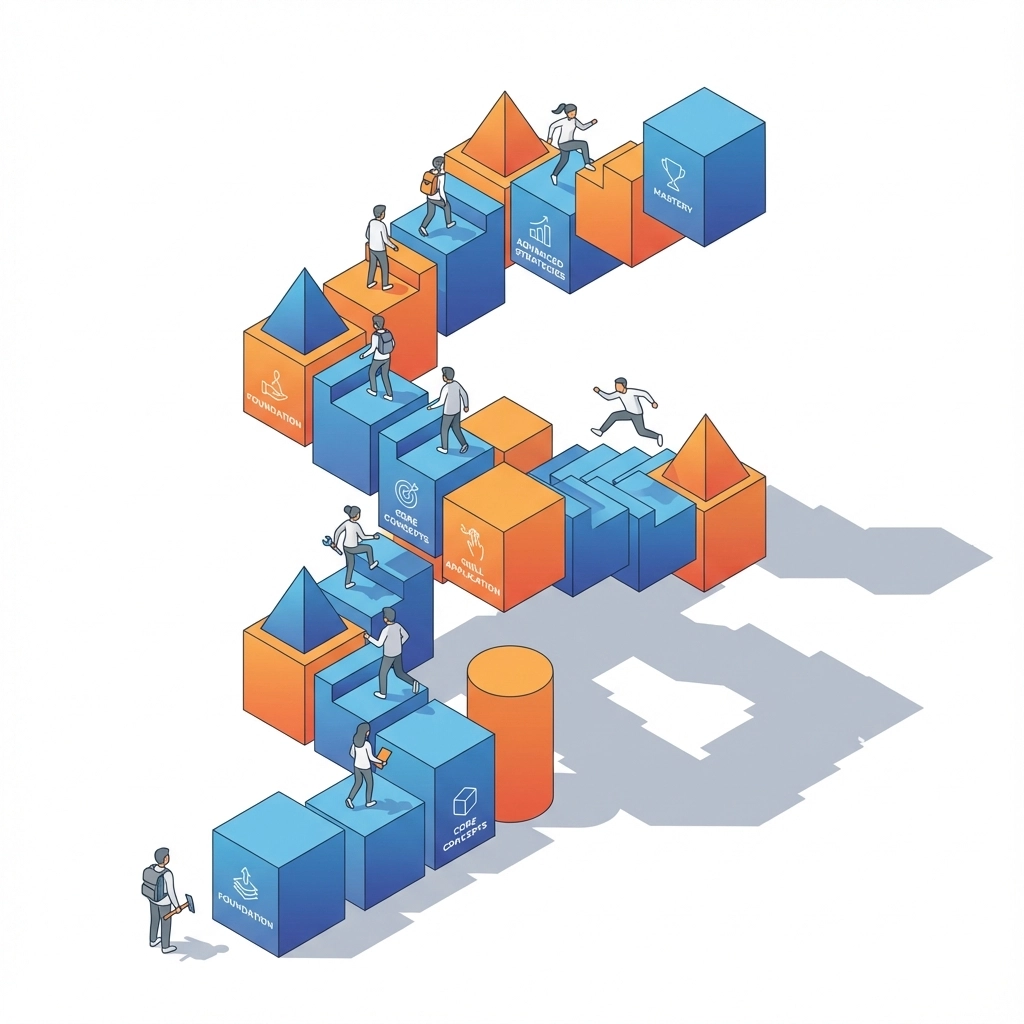
Complex product ecosystems demand custom approaches. If your platform integrates with dozens of other tools, or if your workflow involves proprietary methodologies, you need training that reflects that complexity. Generic programs simply can’t capture the nuances of your specific technology stack.
The real kicker? Immersive technologies like VR and AR simulations are almost exclusively the domain of custom eLearning development. These approaches drive engagement through the roof because they let learners practice in safe, realistic environments that mirror their actual work scenarios.
The Hidden Costs of Generic Training for SaaS Companies
Here’s what most SaaS leaders don’t realize: generic training might seem cheaper upfront, but it’s costing you in ways you’re not tracking.
Customer churn is the big one. When customers can’t effectively use your platform because the training doesn’t match their real-world needs, they leave. And acquiring new customers costs 5-25 times more than retaining existing ones.
Support ticket volume is another hidden cost. Poorly trained users generate more support requests, which means your customer success team spends time on basic questions instead of strategic account growth. (Hello, endless Zendesk tickets!)
Time to value gets extended when customers struggle to see results from your platform. Generic training might teach them what buttons to click, but custom eLearning development shows them how to achieve their specific business objectives using your tools.
Real-World Success Stories: Custom eLearning Development in Action
Let’s talk specifics. One enterprise software company we worked with was struggling with user adoption. Their generic training program covered basic functionality, but customers weren’t seeing value fast enough.
They invested in custom eLearning development that created role-specific learning paths. Sales managers learned different features than data analysts, and each path included scenarios relevant to their industry. The result? User adoption increased by 45% within six months, and customer satisfaction scores jumped significantly.
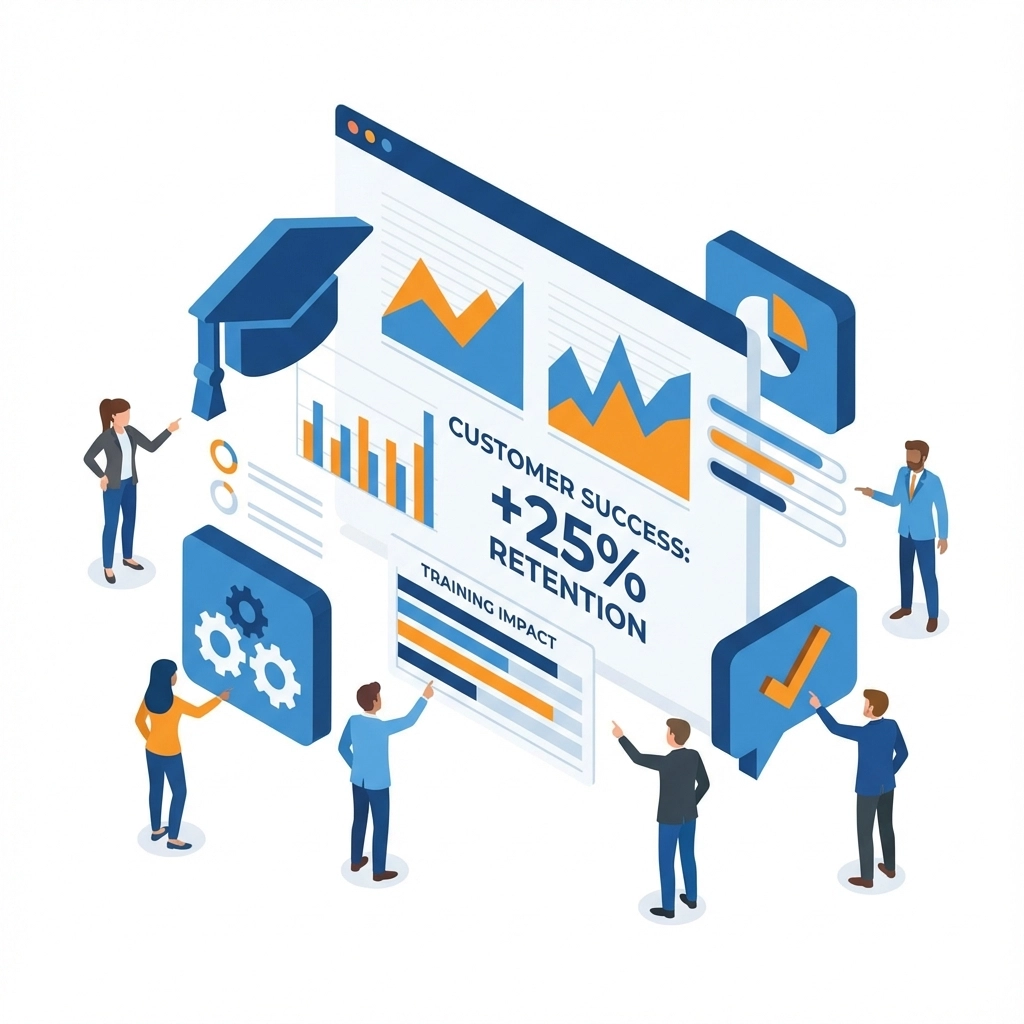
Another SaaS platform serving healthcare organizations realized their generic compliance training wasn’t addressing HIPAA requirements specific to their software implementation. Their custom eLearning development solution included interactive scenarios showing exactly how to handle patient data within their platform while maintaining compliance. Not only did this reduce legal risk, but it also became a competitive differentiator in sales conversations.
The Hybrid Approach: Best of Both Worlds
Smart organizations don’t choose between generic and custom, they strategically combine both. Here’s how the most successful companies structure their training programs:
Foundation layer: Use off-the-shelf courses for universal skills like communication, time management, and basic software literacy. These create a consistent baseline across your organization or customer base.
Application layer: Deploy custom eLearning development for anything specific to your platform, industry, or unique value proposition. This is where you drive real behavior change and competitive advantage.
Specialization layer: Create highly targeted custom modules for advanced users, specific roles, or complex scenarios. These programs often have the highest ROI because they address your most critical use cases.
The key is being strategic about where you invest in custom eLearning development versus where you leverage existing resources.
Making the Right Choice for Your Organization
So how do you decide? Start by asking yourself these questions:
Is the skill or knowledge unique to your organization? If yes, custom eLearning development is probably worth the investment.
Are you trying to change behavior or just transfer information? Behavior change almost always requires custom approaches that address specific contexts and challenges.
What’s the cost of failure? If poorly trained users could churn, create support burdens, or pose compliance risks, custom eLearning development pays for itself quickly.
How complex is your product or service? The more moving parts, integrations, and specialized workflows you have, the more you’ll benefit from custom training approaches.
The truth is, generic training programs aren’t dead: they’re just one tool in a much more sophisticated toolkit. The organizations winning in 2026 are those that strategically deploy both approaches, understanding that custom eLearning development isn’t just an expense: it’s a competitive advantage that drives customer success, reduces churn, and ultimately grows revenue.
Ready to explore how custom eLearning development could transform your customer training? Let’s discuss your specific needs and design a solution that actually moves the needle for your business.