Let's be real, adaptive delivery hacks aren't sexy. They don't have the marketing buzz of "AI-powered content generation" or the shiny appeal of tools that promise to create your entire training library while you sip your morning chai. But here's the thing: if you're an L&D leader or SaaS VP drowning in AI noise, these practical strategies are exactly what will move the needle on learner outcomes.
We get it. Every vendor is screaming about AI. Every demo shows magical content appearing from thin air. And yet, your completion rates are still stuck at 23%, your learners are still confused, and your support tickets haven't budged.
What if the problem isn't creating more content, but delivering it smarter?
The AI Content Trap (And Why You're Falling Into It)
Here's the reality: AI-generated content is incredibly efficient at producing volume. It can churn out modules, quizzes, and assessments faster than any human team. But volume without strategy is just noise.
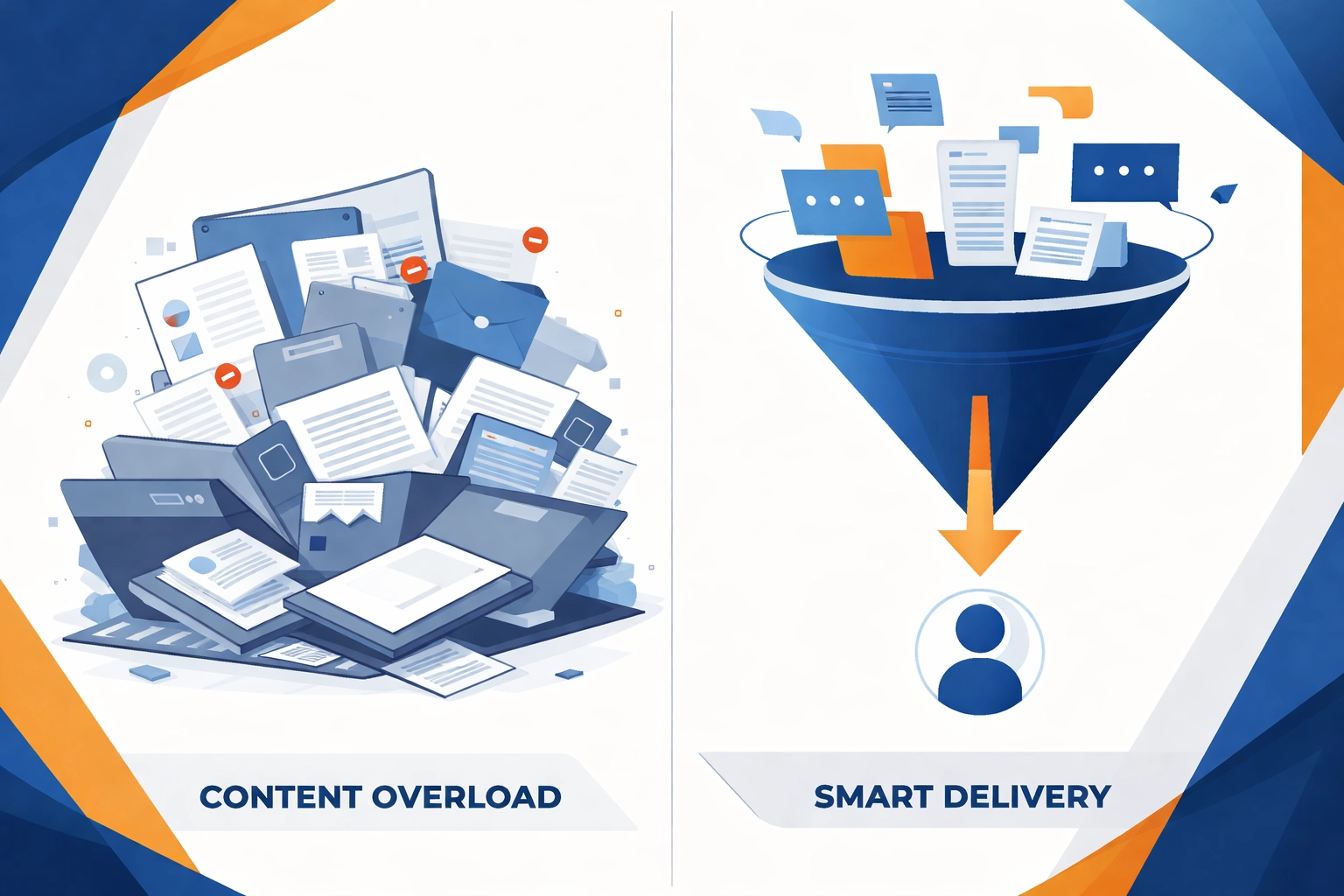
Think about it. Your enterprise learners don't need more content. They need the right content, at the right time, in the right format. That's not a content creation problem, that's a delivery problem.
The companies winning at customer education in 2026 aren't the ones with the biggest content libraries. They're the ones using adaptive delivery to serve personalized learning experiences that actually stick. (And yes, customer education really does drive revenue, when done right.)
What Are Adaptive Delivery Hacks, Anyway?
Before we dive into the seven hacks, let's get on the same page.
Adaptive delivery is the practice of dynamically adjusting how, when, and what content reaches each learner based on their behavior, preferences, role, and progress. Instead of a one-size-fits-all course that treats your power users the same as your day-one newbies, adaptive delivery creates personalized pathways.
It's the difference between Netflix recommending your next binge and a cable TV guide from 1998.
Now, let's get tactical.
7 Adaptive Delivery Hacks That Actually Improve Learner Outcomes
Hack #1: Role-Based Learning Paths (Not Just "Admin" vs. "User")
Most LMS platforms offer basic role segmentation. Admin gets one track, end-user gets another. Groundbreaking, right?
Here's the deal: your learners are more nuanced than that. A marketing manager using your SaaS product has completely different goals than a data analyst using the same tool.
The hack: Create micro-personas based on job function, not just permission level. Then map content delivery to their specific use cases. A marketing manager might need the "campaign automation" track on day one, while your analyst needs "data export and integrations."
This isn't about creating more content, it's about routing existing content more intelligently.
Hack #2: Behavior-Triggered Content Nudges
Stop relying on learners to "come back and finish" their training. They won't. (We see you, 77% abandonment rate.)
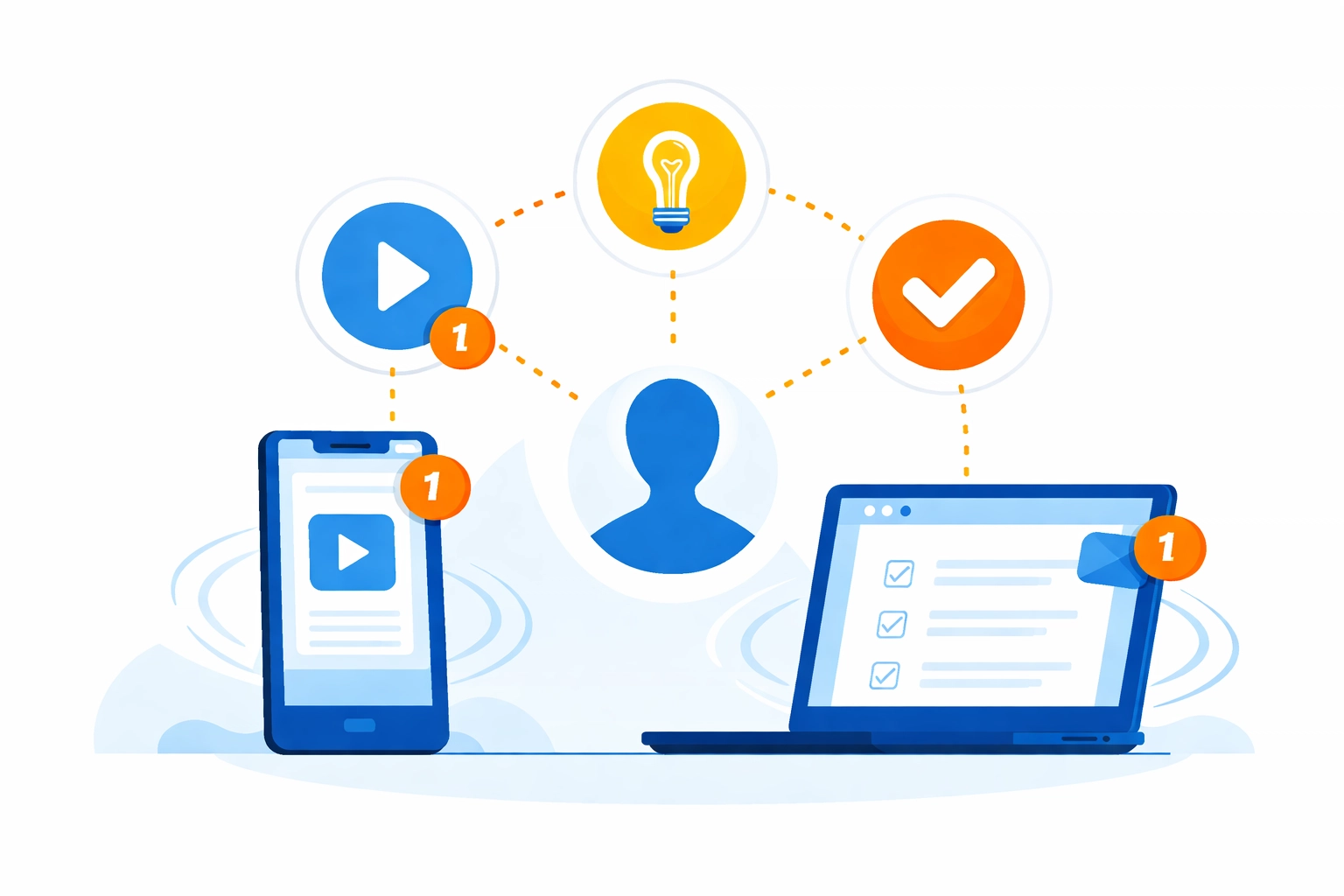
The hack: Set up behavior-triggered nudges that deliver bite-sized content when learners demonstrate specific actions, or inactions. Did they skip the advanced module? Send a two-minute video explaining why it matters. Did they fail a quiz twice? Automatically surface a refresher resource.
This is adaptive delivery in action: responding to what learners do, not just what they're assigned.
Hack #3: Progressive Disclosure Over Content Dumps
Let's talk about cognitive overload. When you dump 47 modules on a new customer, you're not educating them, you're overwhelming them. (Hello, endless support tickets.)
The hack: Implement progressive disclosure. Release content in stages based on learner progress and time-in-product. Week one: onboarding essentials. Week three: intermediate workflows. Month two: advanced features.
This approach respects your learner's bandwidth and increases retention. Plus, it gives you natural touchpoints for engagement.
Hack #4: Device-Aware Content Formatting
Your learners aren't sitting at desks waiting for your 45-minute webinar. They're on mobile during commutes, on tablets during lunch, and on laptops during focused work blocks.
The hack: Adapt content format based on device detection. Serve short-form videos and quick tips on mobile. Reserve longer, interactive modules for desktop sessions. This isn't about creating duplicate content: it's about serving the right format at the right moment.
Most modern LMS platforms support this. If yours doesn't, that's a red flag.
Hack #5: Competency-Based Gating (Skip What You Know)
Nothing kills learner motivation faster than forcing an expert to sit through "Introduction to Basic Concepts."
The hack: Use competency-based assessments as gates. Let learners prove what they already know and skip ahead. This respects their time, maintains engagement, and: bonus: gives you data on where your audience actually needs help.
For enterprise customers managing diverse teams, this is especially powerful. Your power users get challenged. Your beginners get support. Everyone wins.

Hack #6: Contextual In-App Learning Delivery
Why force learners to leave your product to learn your product? That's like asking someone to read the car manual in the parking lot before driving.
The hack: Embed contextual learning directly into your application. Tooltips, guided walkthroughs, and micro-lessons that appear exactly when and where they're needed. This is adaptive delivery at its finest: learning that meets users in their workflow.
This approach requires collaboration between your L&D team and product team, but the payoff is massive. (Need help building this? We've got you covered.)
Hack #7: Feedback Loops That Actually Adapt
Here's the thing most L&D teams miss: collecting feedback is useless if it doesn't change anything.
The hack: Build closed feedback loops that trigger content adjustments. If learners consistently rate a module as "too basic," automatically offer them the advanced version. If a section has high confusion scores, surface additional resources or flag it for revision.
This isn't just personalization: it's continuous improvement baked into your delivery system.
Why Strategy Beats Button-Pushing Every Time
Let's face it: AI tools are tempting. They promise to solve your content problems overnight. And they can help: in the right context.
But here's the honest truth: AI is a tool, not a strategy.
If your delivery system is broken, generating more AI content is like pouring water into a leaky bucket. You'll stay busy, but you won't see results.
The seven adaptive delivery hacks above don't require massive budgets or fancy technology. They require strategic thinking about how content reaches learners, not just what content you create.
Ready to Stop Wasting Time?
If you're an L&D leader or SaaS VP tired of chasing AI hype, it's time to focus on what actually works. Adaptive delivery isn't glamorous, but it's effective. And in 2026, effectiveness is the only metric that matters.
Want to see how these hacks could work for your customer education program? Book a conversation with our team and let's map out a strategy that prioritizes outcomes over output.
Because at the end of the day, your learners don't need more content. They need smarter delivery. And now you've got seven ways to give it to them.