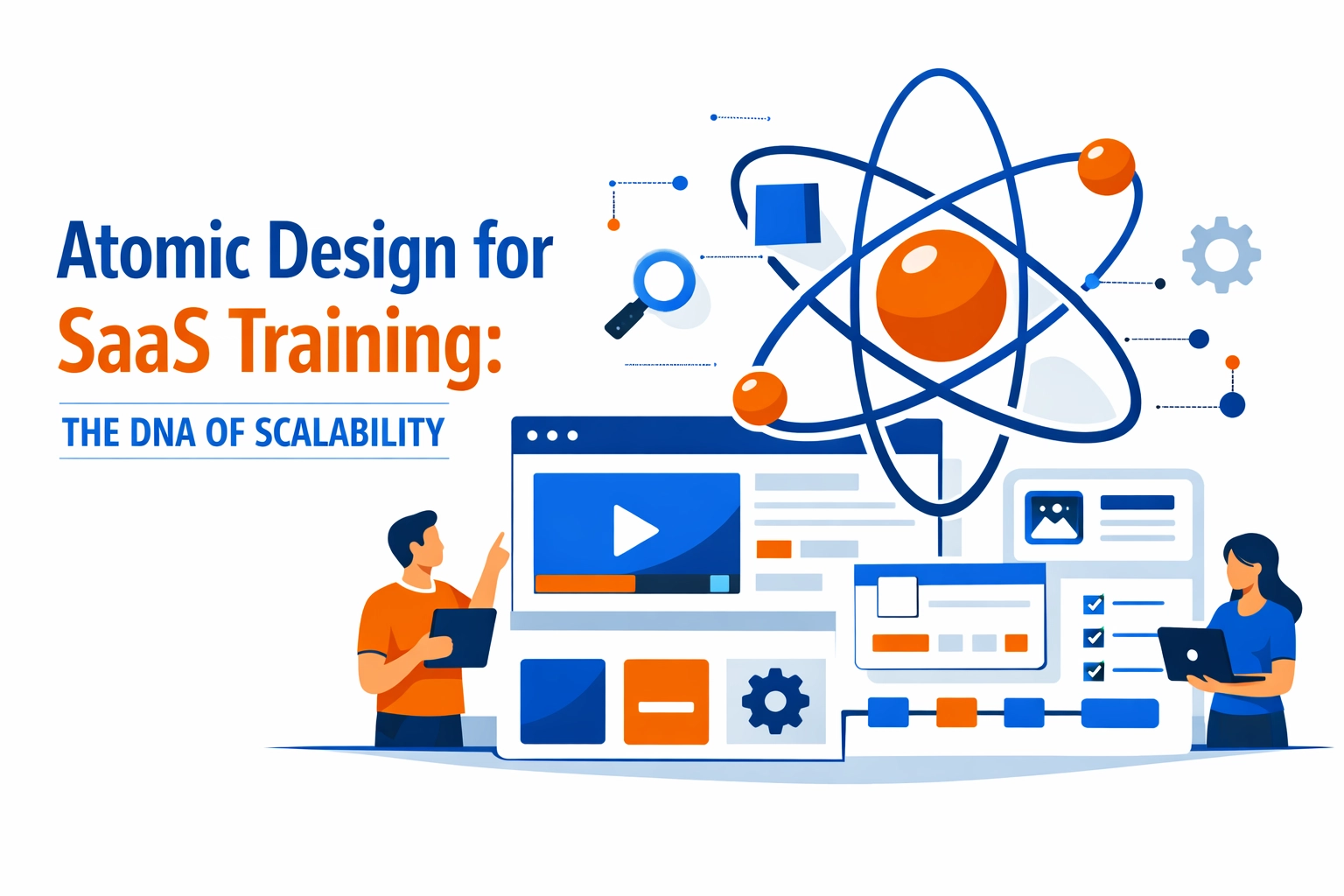
Mastering SaaS training requires more than just a library of content; it demands a shift toward “Atomic Design” for long-term scalability. Let’s be real: most training programs aren’t actually built to last; they’re built to survive the next product launch. (We see you, frantically updating screenshots at 2 AM.)
But here’s the thing: in a world where software updates happen weekly, your learning content can’t afford to be a static monument. It needs to be a living, breathing organism.
Why Traditional SaaS Training Fails the Scalability Test
Here’s the deal: most companies treat “modular” design like a box of Lego blocks. You have a bunch of pieces, you stack them up, and you call it a course. But what happens when the “blue block” (let’s say, your UI’s primary navigation) changes? In a traditional setup, you have to go into every single “stack” and swap that block out manually.
What’s the real impact? You end up becoming a “content janitor” instead of a strategic leader. You spend 80% of your time cleaning up old content and 20% actually innovating.
Does “Atomic Design” fix this? Not by itself. Let’s get one thing straight: Atomic Design isn’t a magic wand for automated updates. It’s a mindset for Microscopic Awareness. It’s about understanding how the smallest atom of information affects the entire DNA of your curriculum.
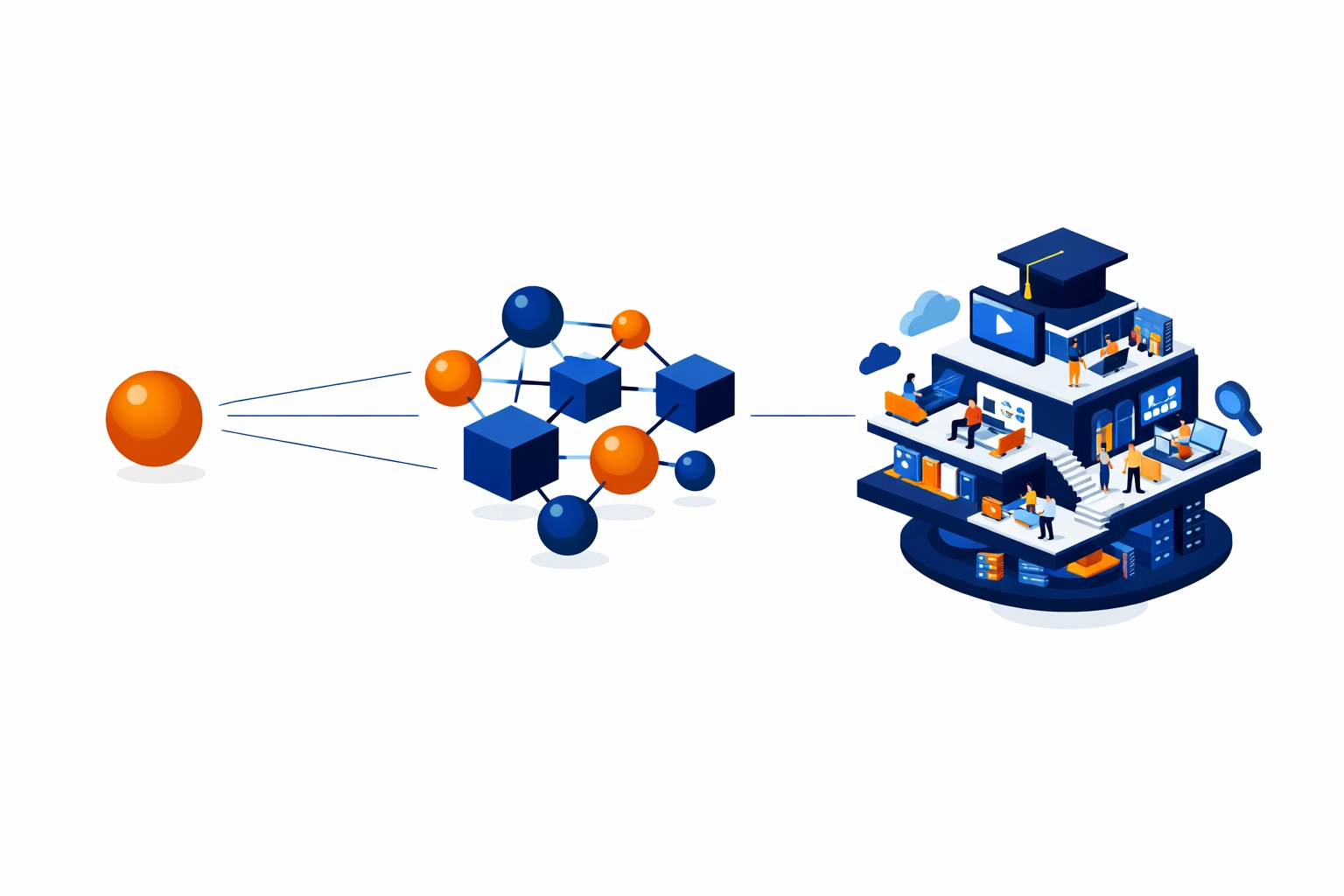
Alt Text: A clean blue and orange vector diagram showing the transition from a single UI ‘Atom’ to a complex ‘SaaS training’ curriculum.
Using the Chemistry of SaaS Training to Build Better Content
To truly scale, we need to stop thinking in terms of “Table of Contents” and start thinking in terms of “Chemistry.” When you partner with a custom eLearning development company, this is the framework that ensures your investment doesn’t rot within six months.
Think of your SaaS training ecosystem like this:
1. Atoms (The Lessons)
These are your smallest functional units. A single “How to Reset Your Password” video or a “Definition of a Lead” text block. On their own, they don’t do much, but they are the essential building blocks.
2. Molecules (The Modules)
When you combine atoms, you get molecules. This might be a “Basic Account Setup” module. It’s a group of lessons that perform a specific function. (Think Netflix binge, but for learning, hopefully with better retention!)
3. Organisms (The Courses & Learning Paths)
This is where it gets complex. Organisms are your full courses. They are functional, standalone entities that provide a complete learner journey. But here’s the kicker: in high-stakes SaaS environments, connectivity matters more than hierarchy. How does the “Account Setup” organism interact with the “Advanced Analytics” organism?
4. DNA (The Curriculum Strategy & Learner Impact)
This is the “why” behind the “what.” Your DNA is your customer education strategy. It’s the underlying code that ensures every lesson, module, and course is driving toward a specific business goal (like reducing churn or increasing ARR).
The SaaS Reality: The Ripple Effect
In the SaaS world, change is the only constant. When your app updates its UI or launches a new feature, you don’t just swap a “block.” You have to audit the entire organism to ensure the DNA remains stable.
Why does this matter? Because one small change in an “atom” can ripple through the entire curriculum.
Imagine you change the way user permissions are handled in your software. That’s one atom. But that atom exists in the “Admin Setup” molecule, the “Onboarding” organism, and the “Security Compliance” learning path. If you don’t have “microscopic awareness,” you’ll miss three of those four instances, and suddenly, your SaaS training is teaching outdated (and potentially dangerous) information.
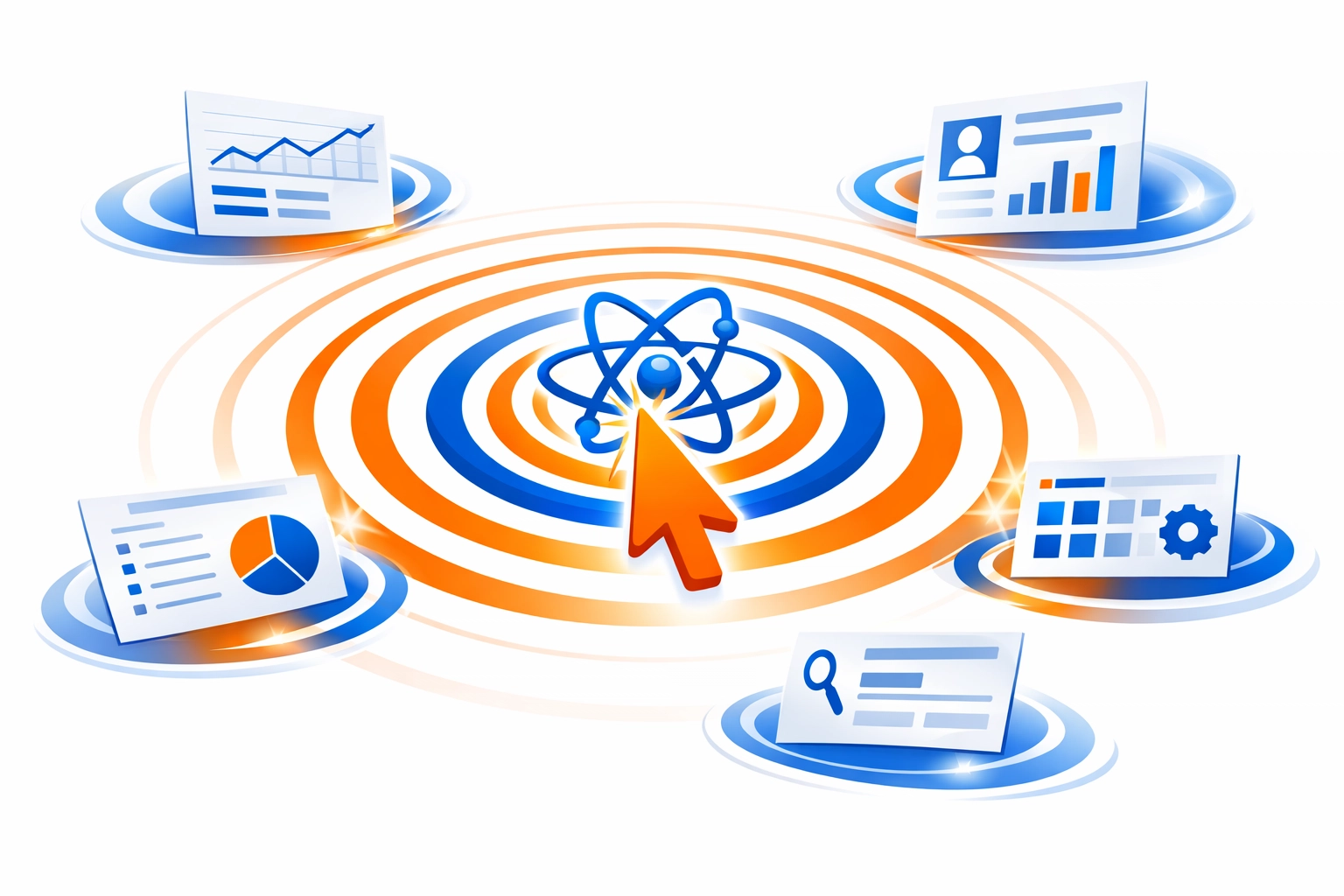
Alt Text: An orange and blue vector illustration depicting a ‘SaaS training’ ripple effect where one small change impacts multiple modules.
Why You Need a Long-Term Instructional Design Team
Let’s face it: you can’t just “outsource and forget” your curriculum. Maintaining a living organism requires a team that understands the ripples.
A long-term Instructional Design team is non-negotiable for enterprise SaaS. Why? Because they are the only ones with the historical context to understand the “DNA” of your strategy. They don’t just “fix content”, they maintain the ecosystem’s health.
They ask the hard questions:
- “If we update this screenshot, does it change the cognitive load of this specific module?”
- “Does this new feature conflict with the foundational concepts we taught in Level 1?”
- “Is this ‘atom’ being reused in a way that creates a contradiction elsewhere?”
Without this level of oversight, your curriculum becomes a “Frankenstein” project, bits and pieces stitched together that barely function as a whole.
The “Start Fresh Rule”: Is Your Curriculum Decaying?
Here’s a “real talk” moment: sometimes, the organism is too decayed to patch.
We get it. You’ve invested a lot of money in your current content. But if your curriculum hasn’t been audited in years, trying to apply Atomic Design to it is like putting a fresh coat of paint on a house with a crumbling foundation.
The Start Fresh Rule: If more than 40% of your “atoms” are outdated or inconsistent, it’s time to rebuild.
Rebuilding doesn’t mean starting from zero; it means re-coding the DNA. It means setting up a system where Atomic Design is baked in from the start, making future updates a breeze instead of a nightmare. (Hello, peaceful product launches!)

Alt Text: A scannable checklist for auditing SaaS training content using blue and orange UI elements.
The Check N Click Difference
At Check N Click, we’ve spent over 13 years helping enterprises scale from zero to robust, audited learning programs. We’ve seen the “modular” mistakes, and we’ve pioneered the “Atomic” solutions. We don’t just build courses; we build resilient learning ecosystems.
Whether you are looking to understand custom eLearning development costs or you need a team to take over the microscopic awareness of your global training, we’ve got the experience to back it up.

Alt Text: A professional vector graphic representing Check N Click’s 13 years of expertise in SaaS training and instructional design.
Don’t Let Your Training Become a Relic
Is your curriculum a living organism or a decaying one?
If you’re tired of being a content janitor and want to start building for the future, let’s talk. You don’t need a magic wand; you need a strategy rooted in the chemistry of learning.
Start with these steps:
- Audit your ‘Atoms’: Identify where your most frequent UI changes occur.
- Define your ‘DNA’: Ensure every piece of content maps back to a business KPI.
- Find your ‘Scientists’: Partner with a team that values connectivity over simple hierarchy.
Ready to see how this looks in practice? Check out our work samples and portfolio to see Atomic Design in action for some of the world’s leading SaaS brands.
Let’s build something that scales. (And maybe get you some sleep during that next product launch!) 🚀

Alt Text: A blue and orange call-to-action graphic for SaaS training strategy sessions.
Want to discuss your specific curriculum DNA? Book time with Lokesh for a deep dive into your instructional design strategy.