The debate between LMS vs Learning Experience Platform is one that keeps customer education leaders up at night, and honestly, we get it. You’re trying to build an academy that actually helps customers succeed, not just another content library that collects digital dust.
Let’s be real: choosing the wrong platform can mean wasted budget, frustrated customers, and a support team that’s still drowning in tickets (hello, endless Zendesk queues).
So which one’s right for your customer education academy? Let’s break it down.
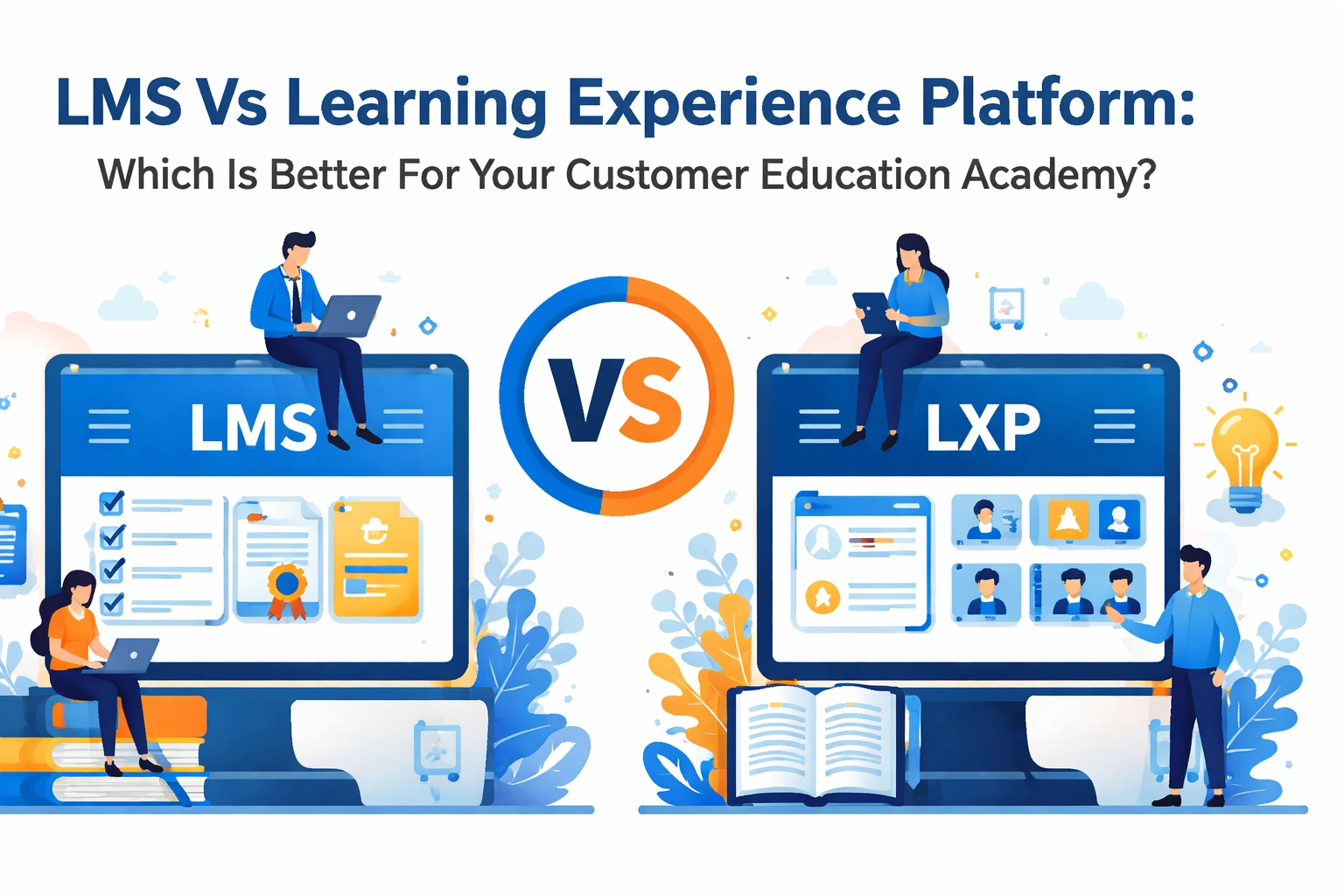
What Even Is an LMS? (A Quick Refresher)
Before we dive into the LMS vs Learning Experience Platform showdown, let’s make sure we’re on the same page.
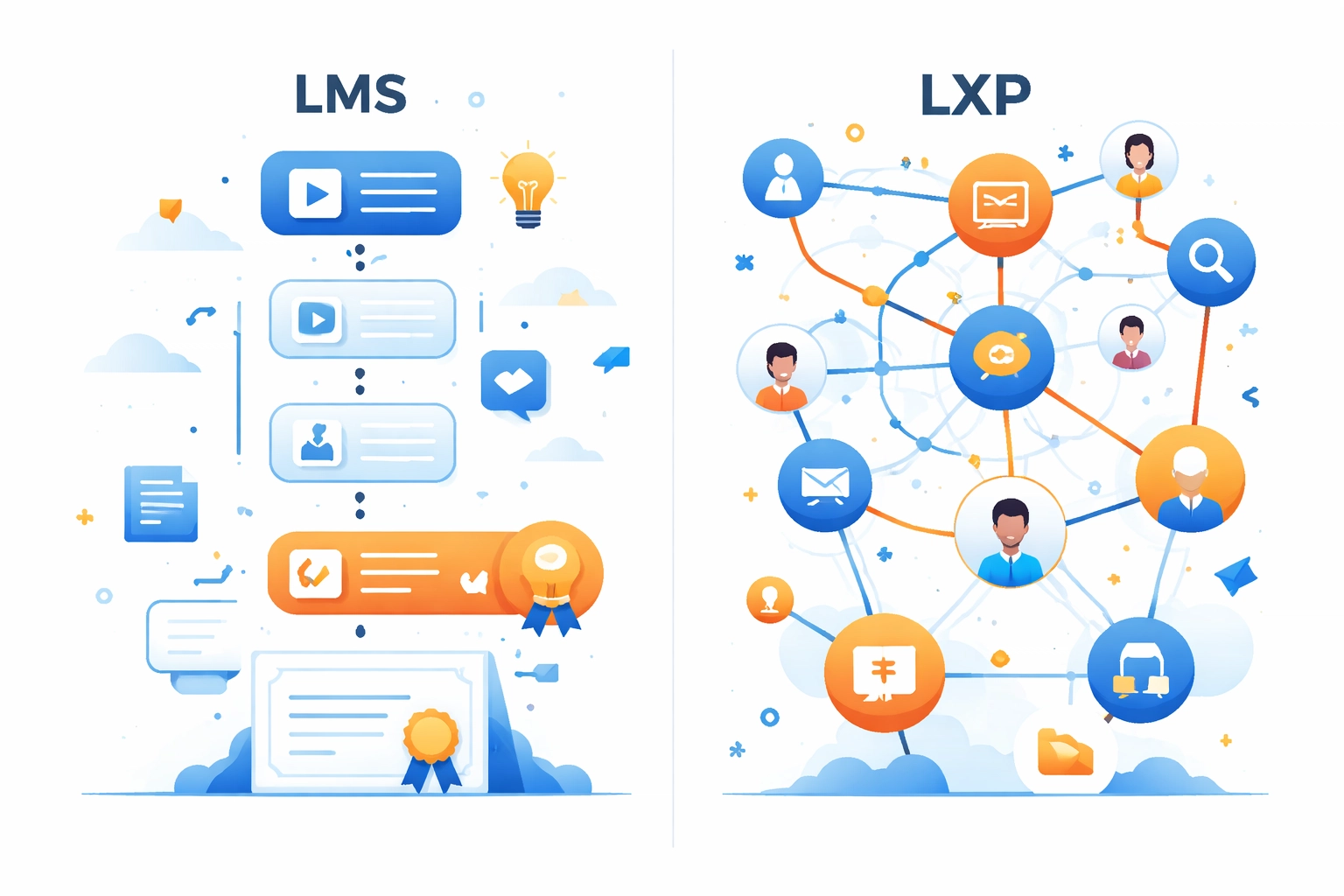
A Learning Management System (LMS) is your classic, structured approach to training. Think of it as the traditional classroom experience, but online. Administrators control everything:
- Course assignments and learning paths
- Completion tracking and certifications
- Compliance reporting
- Standardized content delivery
An LMS follows a top-down, instructor-led model. You decide what customers learn, when they learn it, and in what order. It’s organized, predictable, and great for ensuring everyone hits the same benchmarks.
But here’s the thing, it can also feel a bit… rigid.
What’s a Learning Experience Platform (LXP)?
Now let’s talk about the new kid on the block.
A Learning Experience Platform (LXP) flips the script entirely. Instead of prescribing what customers should learn, it lets them drive their own journey. Think Netflix for learning, personalized recommendations, diverse content sources, and the freedom to explore based on interests and goals.
Here’s what makes LXPs different:
- AI-powered content recommendations based on learner behavior
- Content aggregation from multiple sources (internal, external, user-generated)
- Social learning features like peer discussions and content sharing
- Intuitive, consumer-grade user experience
- Non-linear navigation (customers choose their own adventure)
An LXP prioritizes engagement and discovery over structure and compliance. It’s learner-centric rather than admin-centric.
LMS vs Learning Experience Platform: The Key Differences
Alright, let’s get into the real comparison. Here’s where these two platforms diverge:
| Feature | LMS | LXP |
|---|---|---|
| Learning approach | Structured, top-down | Self-directed, bottom-up |
| Content control | Admin-controlled | Learner-driven |
| Personalization | Limited | AI-powered recommendations |
| Content sources | Primarily internal | Multiple sources (internal + external) |
| Navigation | Linear paths | Flexible, non-linear |
| Social features | Basic or none | Built-in collaboration |
| Best for | Compliance, certifications | Engagement, skill development |
| User experience | Functional | Consumer-grade |
Here’s the deal: neither platform is inherently “better.” It all depends on what your customer education academy actually needs to accomplish.
When Your Customer Education Academy Needs an LMS
Let’s talk about when an LMS makes total sense for your academy.
Choose an LMS if you need:
- Compliance tracking with detailed reporting. If your customers need certifications or must complete specific training for regulatory reasons, an LMS provides the audit trail you need (we see you, regulated industries!).
- Structured onboarding programs, when every customer needs to learn the same foundational knowledge in the same sequence, an LMS keeps everyone aligned
- Certification management, issuing formal qualifications? LMS platforms are built for this
- Standardized content delivery. If consistency is critical across all customer segments, the controlled environment of an LMS ensures no one goes rogue
- Clear completion metrics. Need to prove customers finished specific training? LMS reporting makes this dead simple
Real talk: If your primary goal is ensuring customers complete mandatory training and you need documentation to prove it, an LMS is probably your best bet.
For more on building effective customer education strategies, we’ve got you covered.
When Your Academy Needs a Learning Experience Platform
Now let’s flip to the LXP side of the LMS vs Learning Experience Platform debate.
Choose an LXP if you prioritize:
- Customer engagement and retention: LXPs use personalization and social features to keep learners coming back (think Netflix binge, but in a good way this time)
- Diverse learning content: Want to pull in content from multiple sources, including user-generated materials and external resources? LXPs make this seamless
- Intuitive user experience: External learners (your customers) have zero patience for clunky interfaces. LXPs are designed to feel like consumer apps
- Self-paced exploration: If your customers have different skill levels and learning goals, an LXP lets them find exactly what they need without forced linear paths
- Continuous skill development: Beyond initial onboarding, LXPs excel at supporting ongoing learning journeys
Here’s the reality: If you want customers to actually enjoy learning about your product and keep coming back for more, an LXP creates that sticky, engaging experience.
The Hybrid Approach: Why Not Both?
What if I told you that you don’t have to choose?
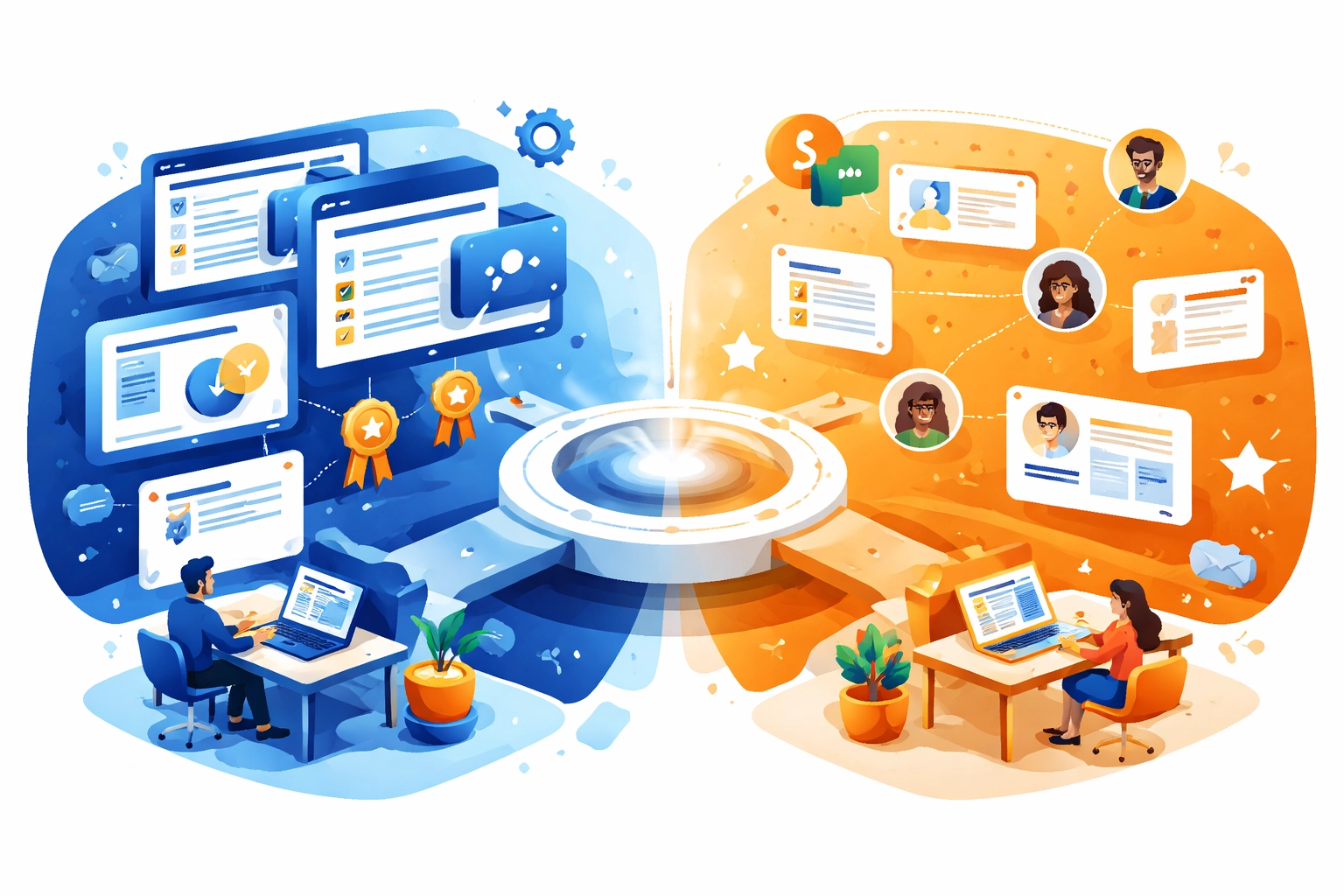
Many organizations are discovering that the best customer education academies combine both platforms. Here’s how it works:
Use your LMS for:
- Mandatory onboarding courses
- Certification programs
- Compliance training
- Formal assessments
Use your LXP for:
- Ongoing skill development
- Product tips and advanced features
- Community-driven learning
- Personalized content discovery
This hybrid approach bridges formal and informal learning, creating a well-rounded experience that serves diverse learning styles and customer needs.
Don’t feel pressured to pick one forever. Start with what addresses your most urgent needs, then expand.
Making the Right Choice for Your Academy
Still not sure which direction to go? Ask yourself these questions:
1. What’s your primary training goal?
- Compliance and certifications → LMS
- Engagement and skill building → LXP
- Both → Hybrid approach
2. How diverse are your customers’ learning needs?
- Everyone needs the same training → LMS
- Different customers, different goals → LXP
3. What does your content ecosystem look like?
- Mostly internal, standardized content → LMS
- Multiple sources, frequently updated → LXP
4. What’s your customer’s tech-savviness?
- Varies widely, needs guidance → LMS
- Self-sufficient, prefers exploration → LXP
5. How important is social learning?
- Not critical → LMS
- Essential for your community → LXP
For a deeper dive into building your customer education strategy from the ground up, check out our complete guide to customer education.
The Bottom Line on LMS vs Learning Experience Platform
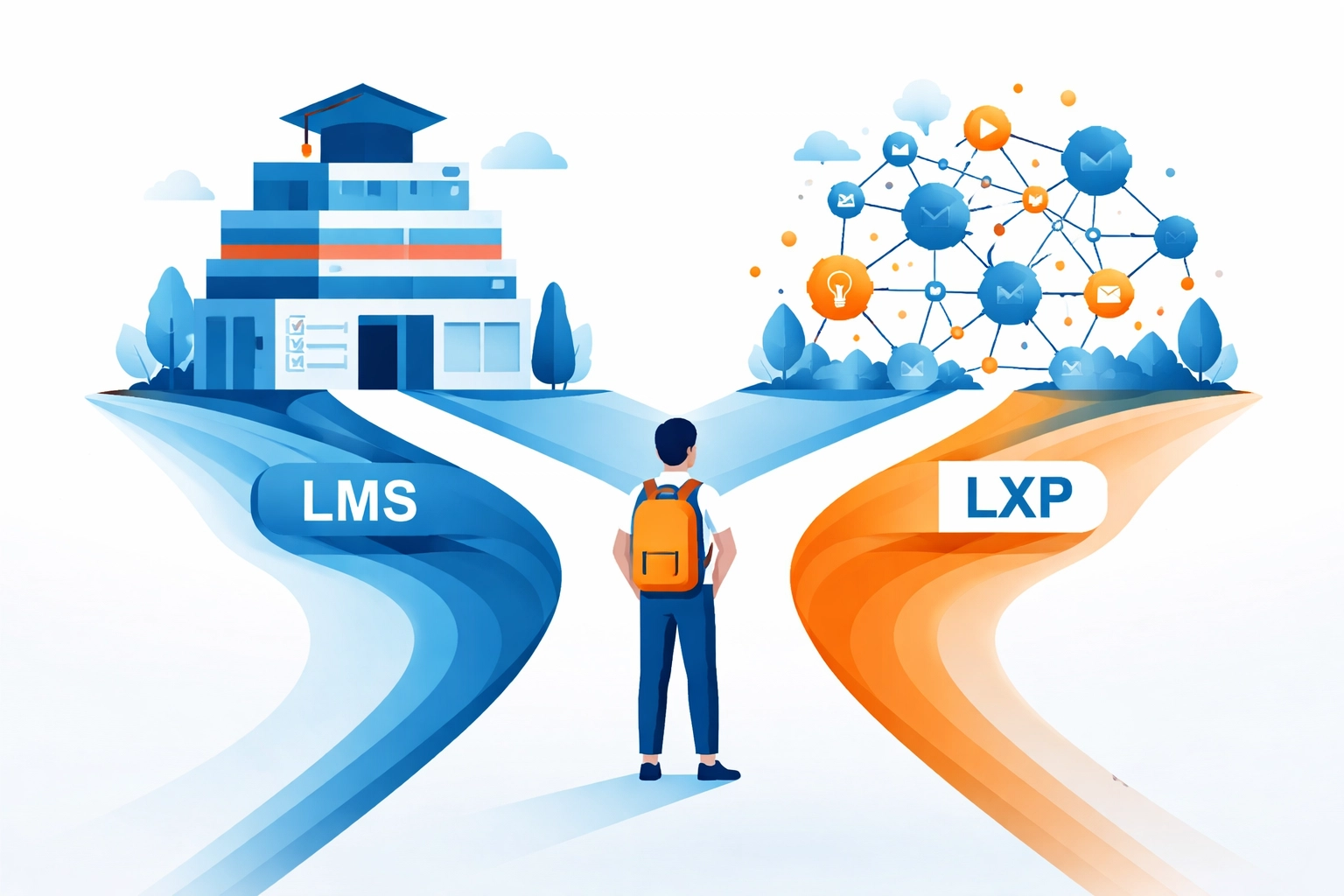
Here’s what it comes down to: the LMS vs Learning Experience Platform decision isn’t about which technology is “better”: it’s about which one aligns with your academy’s goals.
- If you need structure, compliance, and control: Go with an LMS.
- If you need engagement, personalization, and flexibility, an LXP is your friend.
- If you need both, a hybrid approach might be the gold standard.
The good news? You don’t have to figure this out alone.
At Check N Click, we specialize in helping companies build customer education academies that actually drive results: whether that means designing courses for your LMS, creating engaging content for your LXP, or developing a hybrid strategy that covers all your bases.
Ready to build a customer education academy that your customers will actually use? Let’s talk about what makes sense for your specific needs.
Because at the end of the day, the best platform is the one that helps your customers succeed and keeps those support tickets from piling up.