Agentic AI in UI is rewriting the rules of customer education, and if you're still building training around UI walkthroughs, you're about to get left behind.
Let's be real: for the past 20+ years, the eLearning industry has been obsessed with one thing, teaching users how to click buttons. "Here's the reporting menu." "Select your date range." "Hit export." We've spent millions of hours producing videos that walk users through every screen, every dropdown, every navigation path.
Those videos? Not all of them. Let's be real: it's the pure “click-here” segments that are about to become obsolete—primarily in workflows where the UI is being replaced (or heavily minimized) by Agentic AI prompts.
Here's why: Agentic AI is making parts of the interface invisible. And when there’s less interface to teach, the mandate of customer education shifts from knowledge transfer to task enablement.
Think of it like this: the steps don’t disappear, but the way you execute them changes. Instead of manually clicking through menus, users will increasingly type (or speak) prompts to run certain actions—making those specific UI-navigation clips outdated, while strategic, high-level process videos (the “how the business works” layer) stay valuable.
The 20-Year Obsession With UI Walkthroughs
If you've been in this industry long enough (hello, fellow veterans), you know the drill. A new feature launches. The product team panics. Customer Success sends an urgent Slack: "We need training ASAP."
So what do we do? We fire up screen recording software and produce a step-by-step tutorial:
- Click here to access the dashboard
- Navigate to the settings menu
- Toggle this switch
- Save your preferences
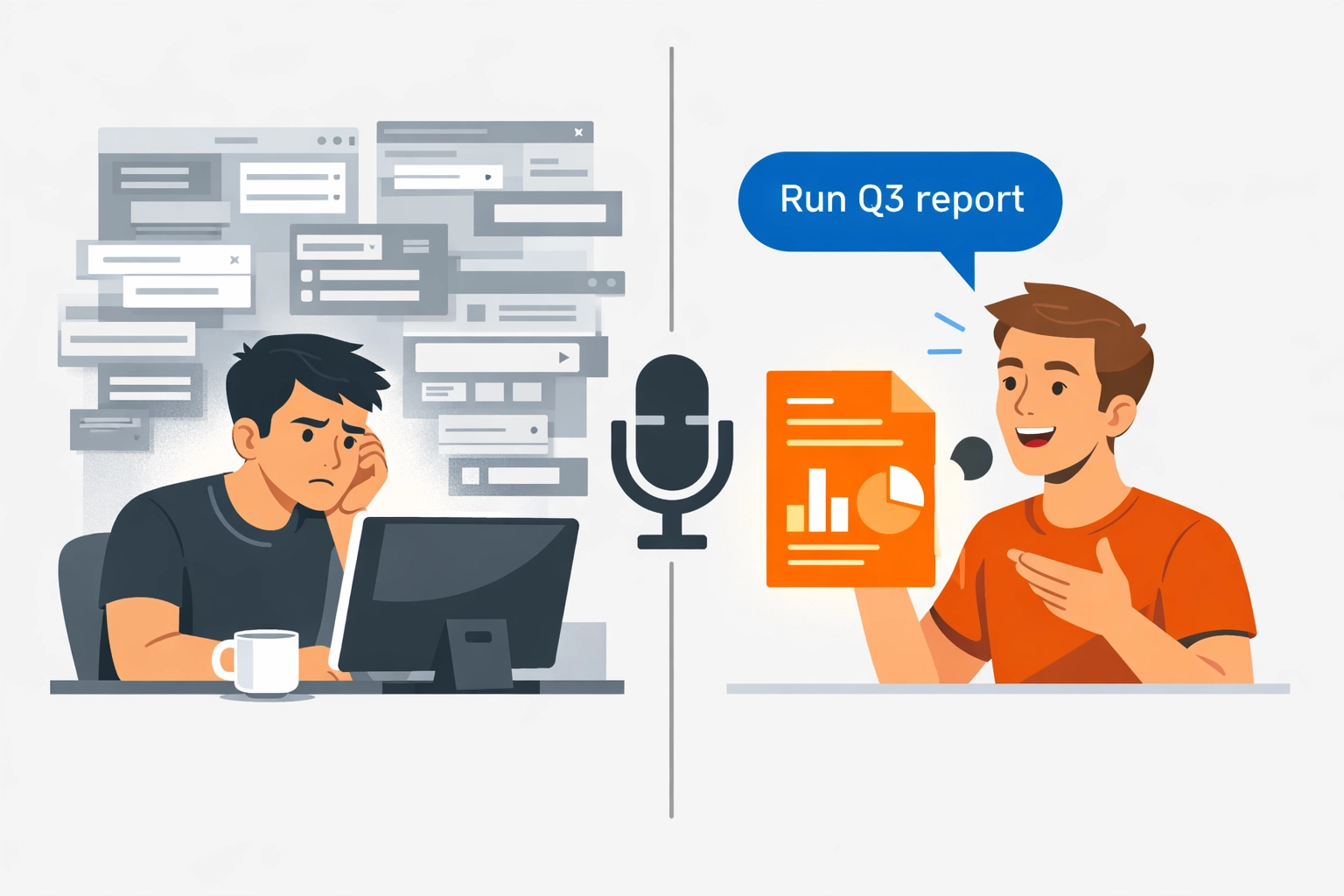
And users? They dutifully watch these videos. Some even take notes. But here's the thing, they don't want to learn your software. They want the outcome your software promises.
That sales report? They don't care how to generate it. They just want it on their desk by 3 PM.
That analytics dashboard? They don't need a degree in navigating your UI. They need insights that help them make better decisions.
For two decades, we've confused "teaching the tool" with "enabling the task." Agentic AI just called us out.
What Agentic AI Actually Changes
Let's talk about what Agentic AI really does (and why it's not just another buzzword).
Unlike traditional automation that follows rigid if-then rules, Agentic AI systems autonomously decide, act, and learn from context. They don't wait for users to figure out where the reporting menu lives. They understand intent and execute tasks directly—which is a huge shift for SaaS training programs that were built around screen-by-screen navigation.
The old way:
User watches a 3-minute video → Remembers (maybe) where to click → Navigates through menus → Generates report
The new way:
User says, "Run the Q3 sales report." → System generates it instantly
No clicks. No navigation. No "Did I remember the right steps?" anxiety.
According to recent studies, Agentic AI in educational systems and UI has led to a 91% reduction in operational friction and 50% fewer support incidents. Why? Because users aren't getting stuck trying to remember which submenu houses that one critical function.
The interface isn't just simplified, it's becoming invisible.
The Shift: Knowledge Transfer → Task Enablement
This is where customer education teams need to wake up.
For years, our KPIs have been built around knowledge transfer metrics:
- Course completion rates
- Quiz scores
- Time spent in training modules
- Video view counts
But here's the uncomfortable truth: users don't care about completing your courses. They care about accomplishing their goals.
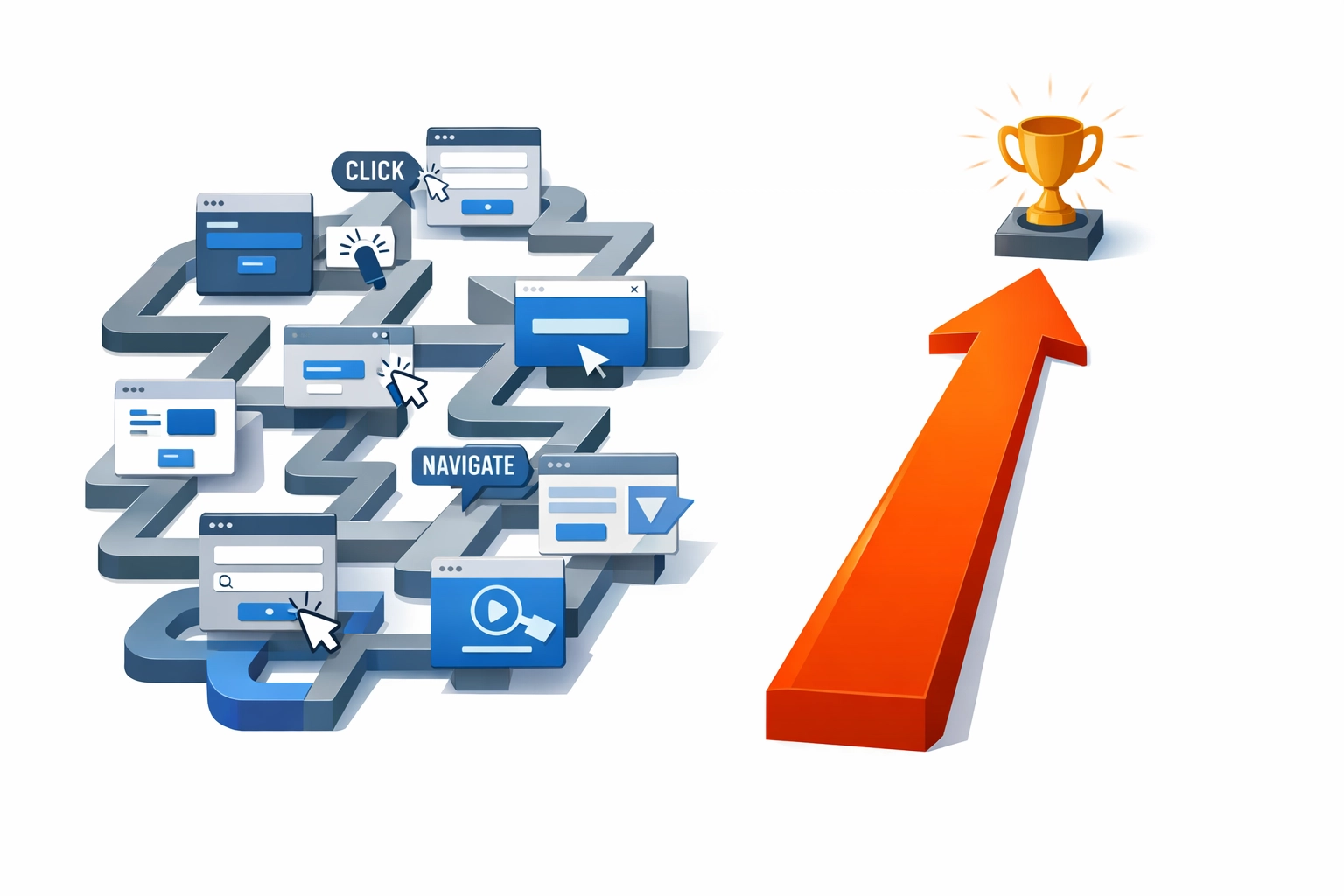
Agentic AI forces us to ask a harder question: If the system can execute tasks autonomously, what exactly should we be teaching?
This is the pivot from knowledge transfer to task enablement. And yes—this requires a shift in instructional design toward strategic outcomes. It's not about teaching users how to use the software. It's about teaching them when, why, and which outcomes to pursue.
Let's break this down:
Knowledge Transfer (Old Model):
- "Here's how to create a custom report"
- "Here's where to find the analytics dashboard"
- "Here's how to export data to CSV"
Task Enablement (New Model):
- "Here's when to use predictive analytics vs. historical reporting"
- "Here's how to interpret this metric for your specific role"
- "Here's what actions to take when this threshold is reached"
See the difference? We're moving from procedural training to strategic education.
If There's Nothing to "Teach" About the UI, What Do You Do?
Great question. (And one that should be keeping every Customer Education leader up at night.)
When Agentic AI handles the mechanics, your team's job transforms completely. You're no longer the "how-to" department. You become the strategic enablement partner that drives business outcomes.
Here's what that looks like in practice:
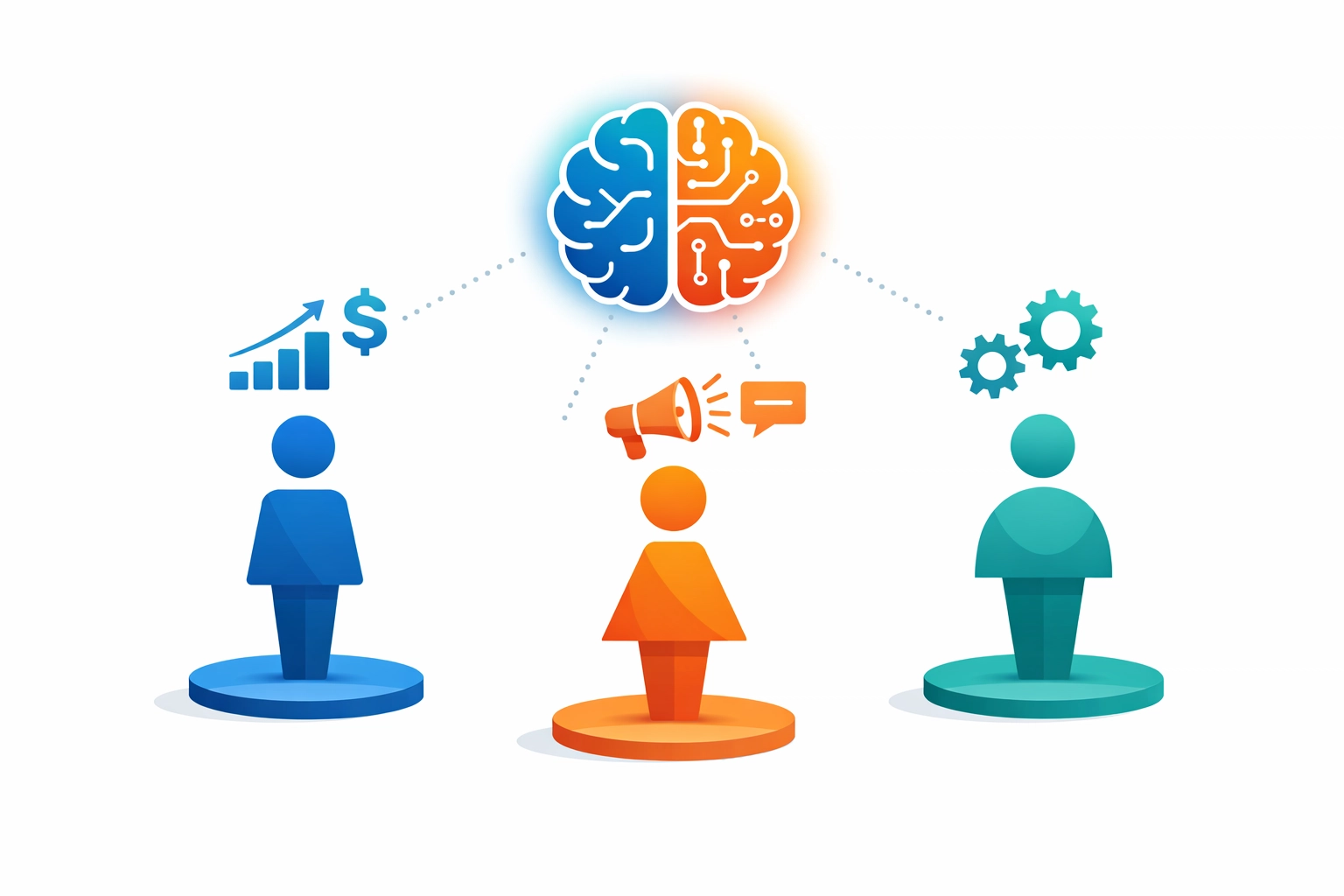
1. Role-Based Strategic Customer Education
Instead of generic "Introduction to Platform X" courses, you're building education around specific roles and their outcomes:
- For Sales Managers: How to use Agentic AI-driven forecasting to adjust territory strategy
- For Marketing Directors: When to pivot campaigns based on real-time sentiment analysis
- For Operations Leads: Which automation triggers to set for maximum efficiency
Notice something? None of these requires a single screenshot of your UI.
2. Decision Framework for Customer Training
Agentic AI can execute tasks, but it can't (yet) make strategic business decisions. That's where your education comes in.
Teach users:
- Which KPIs matter for their specific business goals
- How to interpret Agentic AI-generated insights within their industry context
- When to override automated recommendations (yes, there's still judgment involved)
3. Best Practices and Industry Benchmarking for Customer Education
With the "how" automated, users need context for the "what" and "why":
- What are industry leaders doing differently?
- What patterns predict success in similar companies?
- What mistakes should they avoid (that the AI won't catch)?
This is where your 13+ years of experience in custom eLearning development (like we have at Check N Click) becomes invaluable. You're not teaching software: you're teaching strategy.
The Learning Audit: Three Steps to Survive the Zero-Click Era in Customer Education
Let's get practical. If you're running a customer education program right now, here's your action plan:
Step 1: Purge UI-Based "Click-Here" Content
Go through your training library right now. How much of it is pure procedural navigation? "Click this tab." "Select this option." "Find this menu."
That's friction, not value.
Be ruthless. If an Agentic AI agent could handle the task currently, delete that training module. (Or at least mark it for retirement.)
What to keep:
- Strategic decision-making frameworks
- Industry-specific use cases
- Troubleshooting that requires human judgment
What to purge:
- Screen recording walkthroughs that are no-longer relevant or applicable for the product
- Step-by-step navigation guides if they're not relevant with the integration of Agentic AI in the SaaS interface
Step 2: Pivot to Strategic, Role-Based Customer Education
Reorganize your curriculum around roles and outcomes, not features and functions.
Old structure:
- Module 1: Dashboard Overview
- Module 2: Creating Reports
- Module 3: Managing Users
New structure:
- Sales Manager Enablement: Forecasting with AI-Driven Data
- Marketing Director Playbook: Campaign Optimization Strategies
- Operations Excellence: Automation Decision Trees
This isn't just a cosmetic change. It's a fundamental shift in who you're serving and what problems you're solving.

Step 3: Focus on Business Outcomes, Not Software Proficiency with Customer Education
Rewrite your learning objectives. Stop measuring "Can the user navigate to the reports page?" Start measuring "Did the user make better business decisions?"
New KPIs might include:
- Time to first business insight (not time to course completion)
- Quality of strategic decisions (tracked through customer success data)
- Reduction in support tickets related to "what should I do?" (not "how do I do this?")
For more on aligning education with revenue metrics, check out our guide on customer success and customer education convergence.
Strategy Over Screens: The Check N Click Perspective
After 13+ years building customer education ecosystems, we're seeing a clear pattern: the companies winning in 2026 are betting on strategy, not screens.
They're not racing to document every UI update. They're not panicking when the product team ships new features. Instead, they're building education programs that remain relevant regardless of interface changes.
Why? Because when the interface becomes invisible (thanks to Agentic AI), the only thing that matters is strategic value.
Here's what we're seeing from our clients who've made this shift:
- 40% reduction in "how do I…" support tickets (because users aren't navigating menus anymore)
- 2x increase in feature adoption (because users understand why to use features, not just how)
- Significant improvement in customer retention scores (because users achieve outcomes faster)
The education programs that survive the Agentic AI transformation aren't fighting against automation: they're building on top of it. They're assuming the mechanics will be handled by Agentic AI and focusing entirely on the strategic layer that requires human expertise.

This aligns with what we wrote about in where customer education should live in your organization. Customer education can't be an afterthought. It needs to be strategic from day one.
The Question You Need to Answer Today about Your Customer Education
So here it is, the uncomfortable question every Customer Education leader needs to answer:
Are you still recording clicks for every Customer Education project, or are you building for the Zero-Click era?
If you're honest, most of your current training library probably belongs in the first category. And that's okay: recognizing the problem is the first step.
But the clock is ticking. Agentic AI adoption in SaaS products is accelerating faster than anyone predicted. Companies that delay this pivot will find themselves with outdated training libraries, frustrated users who can't understand why to use AI-powered features (even though they know how), and education teams scrambling to stay relevant.
The good news? This shift is an opportunity, not a threat. Customer education teams that embrace task enablement over knowledge transfer will become more valuable, not less. You'll stop being the "video production department" and become the strategic enablement partner that drives real business outcomes.
What's Next?
If you're ready to audit your customer education program for the Agentic AI era, we can help. At Check N Click, we've spent over a decade helping companies build education programs that scale: and now we're helping them pivot to strategy-first models that survive interface disruption.
The future of customer education isn't about teaching users to click buttons. It's about enabling them to achieve outcomes they didn't even know were possible.
Ready to make the shift? Let's talk.