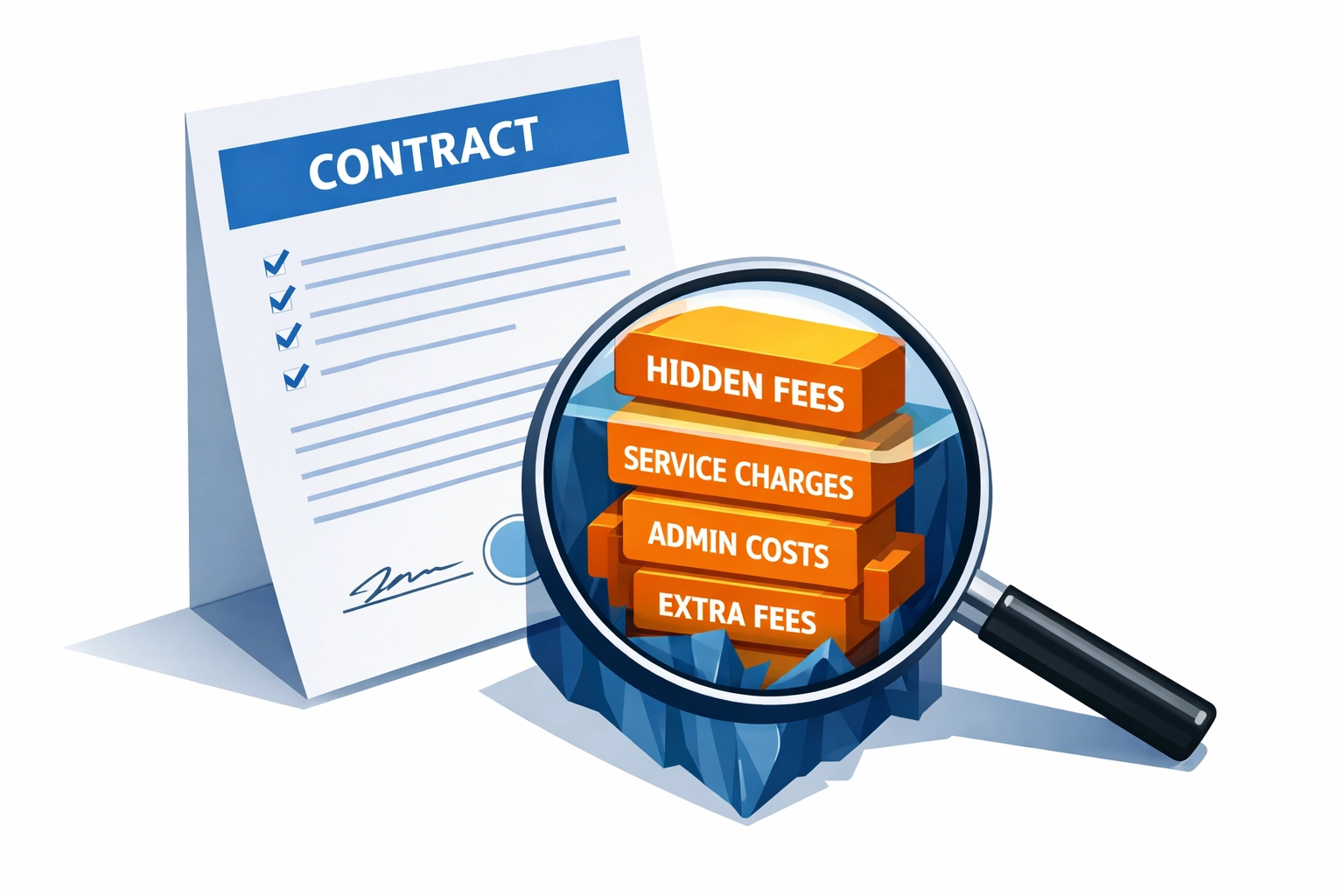
Enterprise LMS pricing conversations in 2026 start with a number that sounds reasonable, $15 per user, maybe $20, and then the add-ons start piling up. If you’re an enterprise learning leader evaluating AI-powered platforms right now, here’s what nobody’s telling you upfront: that headline price? It’s usually just the beginning.
Let’s be real. AI features sound transformative in demos. Personalized learning paths! Automated content recommendations! Predictive analytics! But when you dig into the contract fine print (we see you, procurement teams), the total cost of ownership can inflate by 20-40% compared to what you budgeted. And we’re not even talking about the human costs yet.
Here’s what’s actually happening behind those glossy vendor presentations, and what you need to ask before signing anything in 2026.
LMS Pricing: The Visible Price vs. The Real Price of AI Features
Most AI-powered LMS vendors lead with per-user pricing. It’s clean, it’s simple, it scales with your headcount. Except it doesn’t tell you the whole story.
Here’s what typically shows up later:
- Implementation and integration fees: €10,000-€25,000 for enterprise setups
- Advanced analytics add-ons: €500-€5,000/month per module
- Custom branding and white-labeling
- API access for HRIS integrations (because your HR team will absolutely need this)
- Dedicated support tiers for AI troubleshooting
Some vendors bundle these into base pricing. Most don’t. And the ones who don’t? They’re banking on you not asking until after the sales cycle is too far along to pivot.
The Enterprise LMS AI Token Tax Nobody Mentions
Let’s talk about the cost structure vendors really don’t want to explain: token usage pricing for generative AI features.
If your LMS uses GPT-based models for content generation, summarization, or chatbot interactions, you’re consuming tokens every single time someone uses those features. Think of it like a utility bill, except you don’t see the meter running.
What this looks like in practice:
- A single AI-generated quiz might cost 2,000-5,000 tokens
- Real-time chatbot support burns through tokens per conversation
- Automated content recommendations consume background tokens continuously
Vendors rarely surface this cost in initial pricing. You’ll discover it when you hit your “included token limit” three months in and suddenly face overage charges or feature throttling. For a 500-employee organization with active AI usage, token overages can add $2,000 to $8,000 per month to your bill.
Ask the question now: “What’s my monthly token allocation, and what happens when I exceed it?”
Premium Support for Enterprise LMS: The Hidden Dependency
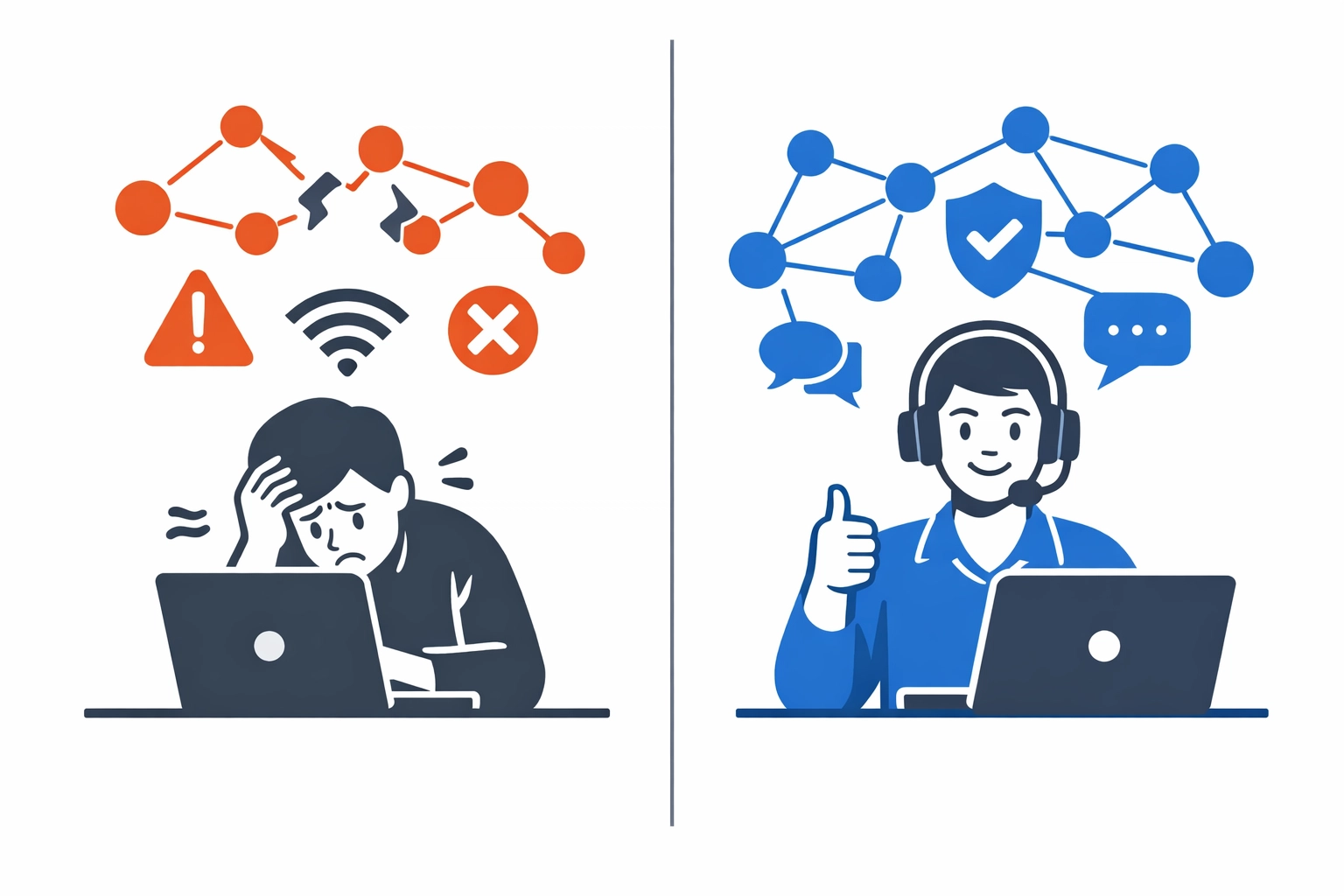
Here’s the thing about AI features: they break in ways traditional LMS features don’t. Machine learning models need retraining. Recommendations drift. Integrations with external AI services fail.
You know what fixes that? Premium support. You know what’s not included in base pricing? Premium support.
Standard support typically excludes:
- AI model tuning or customization
- Prompt engineering assistance for generative features
- Debug support for custom AI workflows
- Dedicated account management for enterprise AI deployments
These support tiers can add $5,000 to $15,000 annually per 500 users. And if you’re running mission-critical customer education programs (hello, SaaS companies), downtime isn’t an option. Premium support stops being optional real fast.

Data Privacy Compliance of Deploying an Enterprise LMS with AI: The Enterprise Tax
Let’s face it: if you’re in healthcare, finance, or serving EU customers, your AI-powered Enterprise LMS needs to handle data privacy compliance properly. That means:
- GDPR-compliant data processing agreements
- HIPAA alignment for healthcare training
- SOC 2 Type II certifications
- Data residency guarantees (especially for international teams)
The catch? AI features often process learner data through third-party model providers (think OpenAI, Anthropic, or vendor-specific ML pipelines). Getting contractual guarantees that your learner data won’t be used to train external models or that it stays within specific geographic boundaries costs extra.
Budget for compliance add-ons in the range of €3,000-€10,000 annually for enterprise agreements. And if your vendor can’t provide clear data processing documentation? Walk away. The compliance risk isn’t worth it.
The Human-Led Instructional Design Gap with an AI-enabled Enterprise LMS
Here’s where the real hidden cost lives: and it’s not a line item on your vendor invoice.
AI can generate content. It cannot design effective learning experiences.
We’ve worked with dozens of SaaS businesses and enterprise learning teams at Check N Click, and here’s what we see consistently: organizations buy AI-powered Enterprise LMS platforms expecting content creation to become automatic. Then they discover their AI-generated courses have:
- No clear learning objectives aligned to business outcomes
- Generic assessments that don’t test real-world application
- Content that’s technically accurate but pedagogically useless
- Zero connection to customer education flows or product enablement strategies
The fix? Human-led instructional design and custom eLearning development. Custom eLearning Development still needs experienced learning designers to:
- Define competency frameworks
- Design assessments that actually measure skill transfer
- Structure learning paths that connect to business metrics
- Curate and refine AI-generated content into coherent programs
Don’t try to automate this away. AI is a tool for execution velocity, not a replacement for a learning strategy. If your vendor is selling AI as a way to “eliminate” instructional design costs, they’re setting you up for ineffective training programs that won’t move revenue metrics.
The Annual Price Creep
One more thing buried in contracts: annual price increases. Many Enterprise LMS vendors lock in 5-15% annual increases, often tied to vague “market rate adjustments” or “AI infrastructure costs.”
Over a three-year contract with 500 users, these increases can add €15,000 to €45,000 to your total cost of ownership. Some vendors offer price lock guarantees; others don’t. Make this a negotiation point before you sign.
What to Ask Your Enterprise LMS Vendor Before Signing
Let’s get tactical. Here are the questions that expose hidden costs before they surprise you:
On AI feature costs:
- “What’s my included token allocation per month, and what are the overage rates?”
- “Which AI features are included in base pricing vs. add-on modules?”
- “Do you charge separately for advanced analytics or AI-driven insights?”
On support and implementation:
4. “What’s included in standard support vs. premium tiers for AI features?”
5. “What are your implementation fees, and can they be waived for enterprise contracts?”
6. “Who handles AI model tuning: your team or ours?”
On compliance and data:
7. “Where does learner data get processed, and do you support data residency requirements?”
8. “Can you provide GDPR/HIPAA data processing agreements specific to AI features?”
9. “Does learner data train your AI models or third-party models?”
On pricing structure:
10. “Are annual price increases capped? What’s the historical increase rate?”
11. “What’s the total cost of ownership for 500 users over three years, including all add-ons?”
If your vendor can’t answer these clearly, that’s a red flag.
Why This Matters for SaaS Customer Education
If you’re running customer education programs for a SaaS product, hidden LMS costs hit differently. Your training directly impacts product adoption, time-to-value, and expansion revenue. This is especially true for SaaS training programs that need predictable spend to scale. When your LMS becomes more expensive than planned, it squeezes the ROI of your entire customer education program.
The strategic question becomes: Are you investing in AI features that genuinely improve learner outcomes and business metrics, or are you paying for vendor R&D that doesn’t move your customer education KPIs?
At Check N Click, we help SaaS businesses and enterprise learning teams navigate these decisions from an instructional design and LMS administration perspective. We’ve seen the under-the-hood costs, the contract surprises, and the AI features that over-promise and under-deliver. Our custom eLearning development expertise means we understand what actually drives learning effectiveness, and what’s just expensive noise.
The Bottom Line
AI-powered LMS pricing in 2026 is more complex than per-user rates suggest. Between token usage, premium support, compliance costs, and the ongoing need for human-led instructional design, your true cost of ownership can land 20-40% higher than initial quotes.
Before you sign:
- Get detailed breakdowns of all cost components
- Negotiate price lock guarantees and implementation fee waivers
- Pilot AI features with real workflows to uncover limitations
- Budget for instructional design support: AI won’t eliminate that need
And if you need help evaluating vendors, designing effective learning programs, or navigating the complete landscape of customer education platforms, we’re here. Because the right LMS investment isn’t about the flashiest AI features: it’s about building learning experiences that actually move business metrics.
Ready to dig deeper? Let’s talk about what AI-powered learning really costs: and what it should actually deliver.