Let’s be real: effectively scaling customer education shouldn’t feel like you’re chasing a ghost in a machine. If you’ve spent any time in a boardroom or a LinkedIn feed lately, you’ve likely been bombarded with the promise of AI-driven personalization. It’s the “holy grail” of EdTech, a magical algorithm that figures out exactly what your users need before they even know they need it. (Think Netflix binge-watching, but for software tutorials!)
But here’s the thing: while the hype is loud, the reality for most Global Enterprises and high-growth SaaS companies is a bit more complicated. Before you sign that massive contract for an AI-powered Learning Management System (LMS), we need to have a “real talk” moment. Do you actually need AI-driven personalization for your customer education strategy to succeed, or are you just buying a very expensive shiny object?
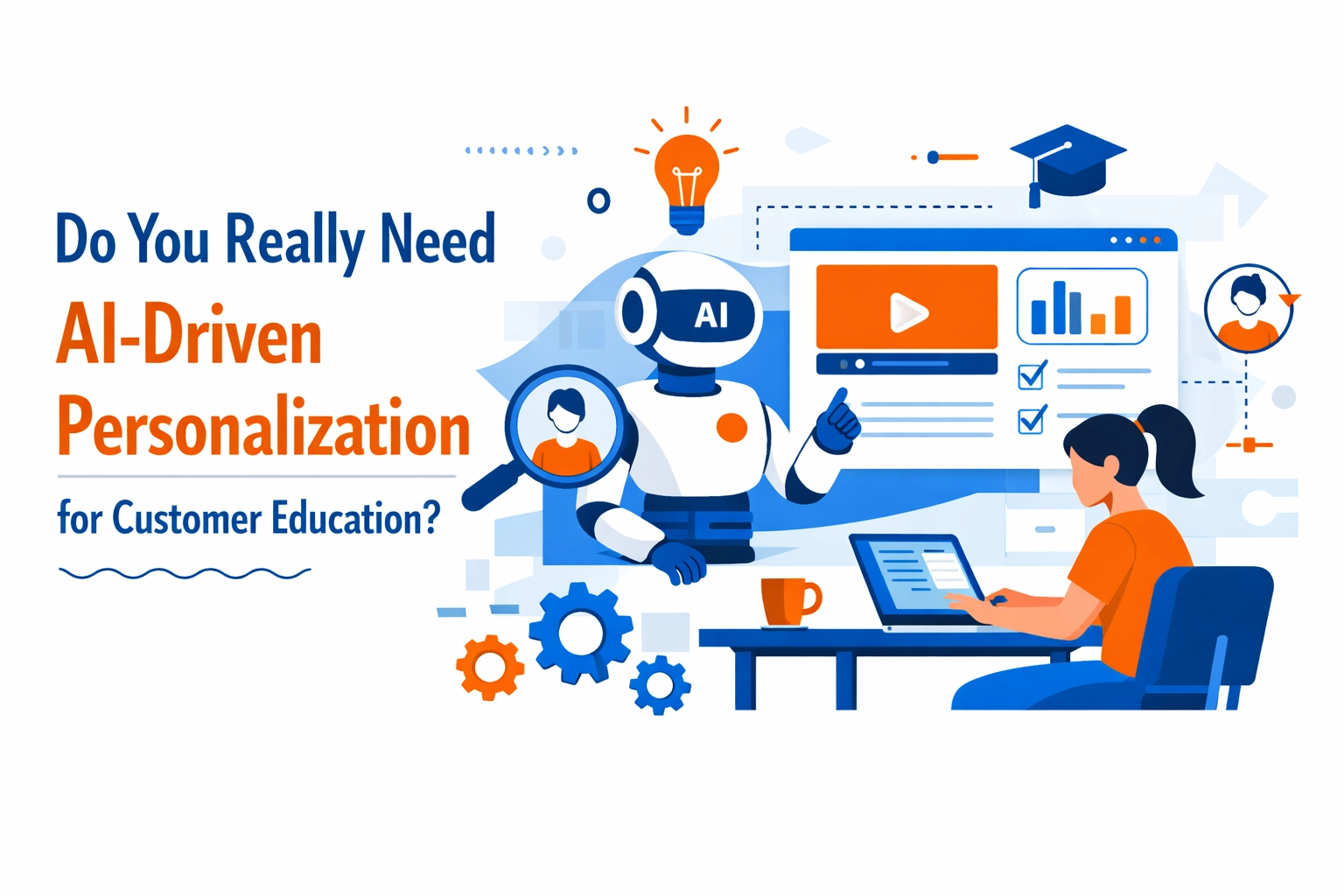
The Allure of AI-Driven Personalization in Customer Education
Let’s talk about why everyone is obsessed with AI right now. On paper, it sounds incredible. Research suggests that organizations using AI-personalized learning can see a 30% increase in engagement and up to a 40% improvement in student retention. For a Fortune 500 company managing thousands of global users, those numbers look like a straight line to a promotion.
The dream is simple: a user logs in, the system analyzes their behavior, identifies their skill gaps, and serves up a custom-tailored learning path. No more wading through irrelevant modules. No more “Introduction to the Dashboard” for the power user who has been using your tool for three years. It reduces the operational burden on your support team (hello, fewer Zendesk tickets!) and accelerates time-to-value.
But: and there is always a “but”: is the technology actually ready to deliver that promise without a mountain of manual labor behind the scenes?
Alt text: AI-driven personalization trends in customer education showing the gap between hype and reality.
The Hidden Costs and Complexity of AI for Customer Education
Here’s the deal: AI is not a “set it and forget it” solution. To make customer education truly personalized via AI, you need three things that most companies struggle with: clean data, massive content libraries, and constant maintenance.
- The Data Problem: AI feeds on data. If your user data is siloed across CRM, CS, and Product tools, your AI is flying blind. If the input is messy, the personalized recommendations will be irrelevant, which actually hurts the user experience.
- The Content Hunger: Personalization requires options. If the AI decides User A needs a different path than User B, you need to have created both paths. Suddenly, your lean content team is expected to produce 5x as much material. (We see you, over-tasked content managers!)
- The Integration Tax: Integrating AI-driven tools into a complex enterprise ecosystem often takes months of engineering time. What’s the real impact? You might spend more on the implementation than you save in support costs.
At Check N Click, we’ve seen enterprises get caught in this “complexity trap.” They invest in the tech before they have the foundational customer education strategy in place. Before you leap into the AI abyss, you have to ask: Is your content even ready to be personalized?
Why Modular, Atomic Design is the Real Hero of Customer Eduction
What if we told you there’s a way to achieve high-impact personalization without the AI price tag? Enter the “LEGO strategy”: also known as Modular or Atomic Design.
Instead of building massive, monolithic courses that are impossible to update, you build your customer education in small, reusable chunks. When you use instructional design services to create a modular library, you can manually (or with simple logic) create “personalized” paths that are 90% as effective as AI but 100% easier to manage.
This approach is your secret weapon against UI Drift. We’ve talked before about how fast SaaS interfaces change. If your AI recommends a video from six months ago that shows a button that no longer exists, your “personalized” experience just became “confusing”. With modular design, you just swap out the one outdated “atom” and your entire curriculum stays fresh.
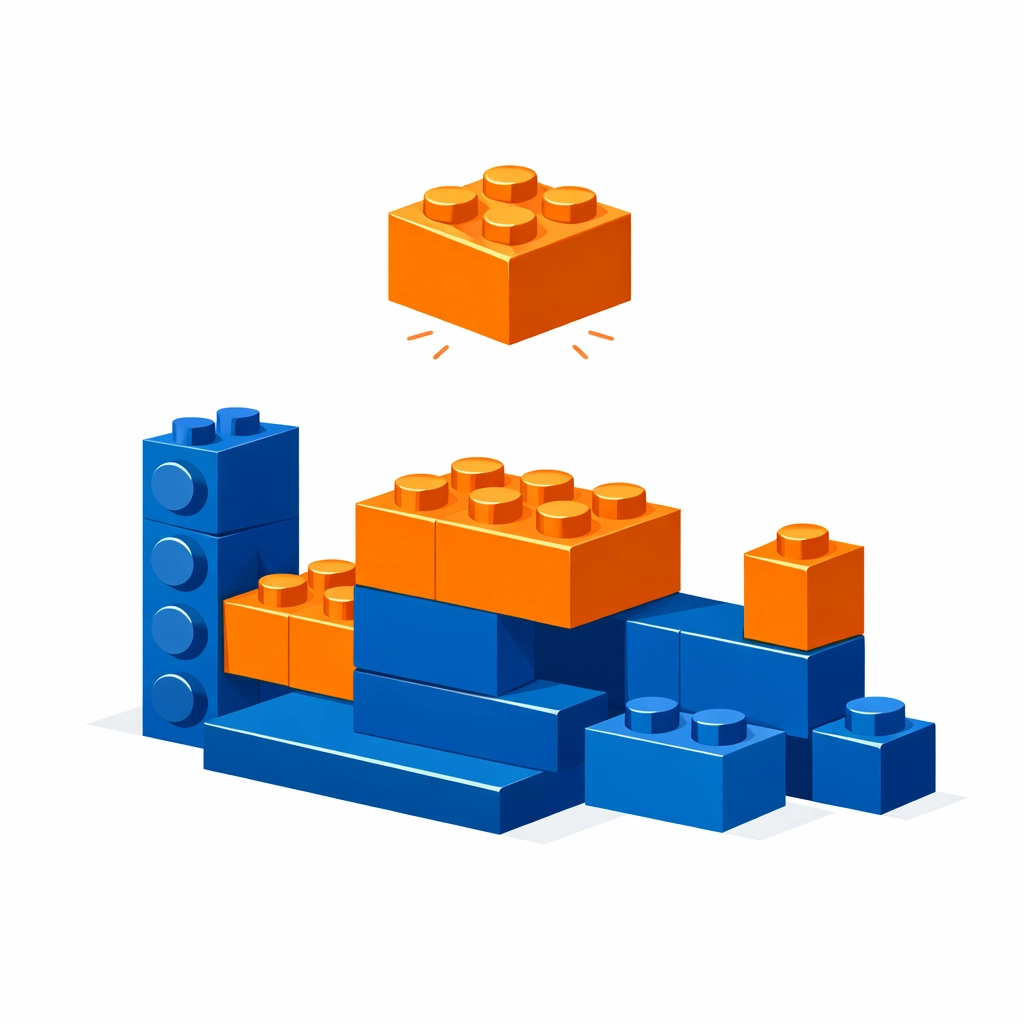
Alt text: Modular customer education design showing learning blocks being rearranged for different user paths.
Foundational Instructional Design: The Real ROI Driver
Let’s face it: no amount of AI can save a poorly designed course. If your content doesn’t follow basic Gagne’s Nine Events of Instruction or wasn’t built using a solid SAM or ADDIE framework, it won’t drive adoption.
The true ROI of customer education comes from how well your users can actually use your product. We’ve helped clients see massive gains by focusing on the fundamentals first.
- Empathic Design: Understanding the user’s specific pain points.
- Active Learning: Giving them sandboxes to practice in.
- Clear Outcomes: Measuring success by product usage, not just “gold stars” for course completion.
If you’re curious about how your current training stacks up, check out our ROI calculator for training investment. It often reveals that the biggest leaks in your bucket aren’t a lack of AI: they’re a lack of clear, custom eLearning development that speaks to the user’s needs.

Alt text: A dashboard showing customer education UI drift and its impact on user trust.
How to Know if Your Enterprise is Actually Ready for AI
Don’t feel pressured to jump on the AI bandwagon just because your competitors are. Here’s a quick “Real Talk” checklist to see if your customer education program is ready for AI-driven personalization:
- Do you have more than 50 distinct modules of high-quality content? (AI needs a “menu” to choose from).
- Is your user data centralized and accessible? (AI needs to know who the user is).
- Have you mastered Modular Design? (You can’t automate what you haven’t organized).
- Is your product stable enough that your content doesn’t need weekly updates? (AI-driven paths are harder to audit for accuracy).
If you answered “No” to more than two of these, you aren’t ready for AI: and that’s okay! You’ll get much better results by investing in custom eLearning development that focuses on the core user journey. Start with a solid foundation, and the AI can come later as a force multiplier, not a fix for a broken strategy.
Alt text: A readiness assessment checklist for AI in customer education.
The Check N Click Perspective: Be Strategic, Not Trendy
At Check N Click Learning and Technologies Pvt. Ltd., we love innovation. We’re constantly exploring how technology can make learning better. But we also believe in being the voice of reason for our clients. (Your budget is too important to waste on buzzwords!)
The most successful customer education programs aren’t the ones with the flashiest AI; they’re the ones that solve the user’s problems at the exact moment they have them. Whether that’s through a Higher Logic development or a beautifully crafted series of micro-learning videos, the goal remains the same: customer success.
Ready to stop chasing the AI ghost and start building a training engine that actually scales? We’ve got the case studies to prove that the right strategy beats the “right” algorithm every time.
Don’t navigate this alone. Book time with Lokesh to discuss how to build a future-proof customer education program that balances human-centric design with the right amount of technology. Let’s make your learning experience something your users actually want to binge.