Let’s be real: effective customer education is the only way to move from vanity login metrics to real business success.
In the high-stakes world of SaaS, customer education is the bridge between “I bought this tool” and “I can’t run my business without this tool.” If you’re still measuring the success of your platform by how often people show up rather than what they achieve once they’re there, you’re flying blind. It’s time to shift the focus from vanity metrics to educated outcomes.
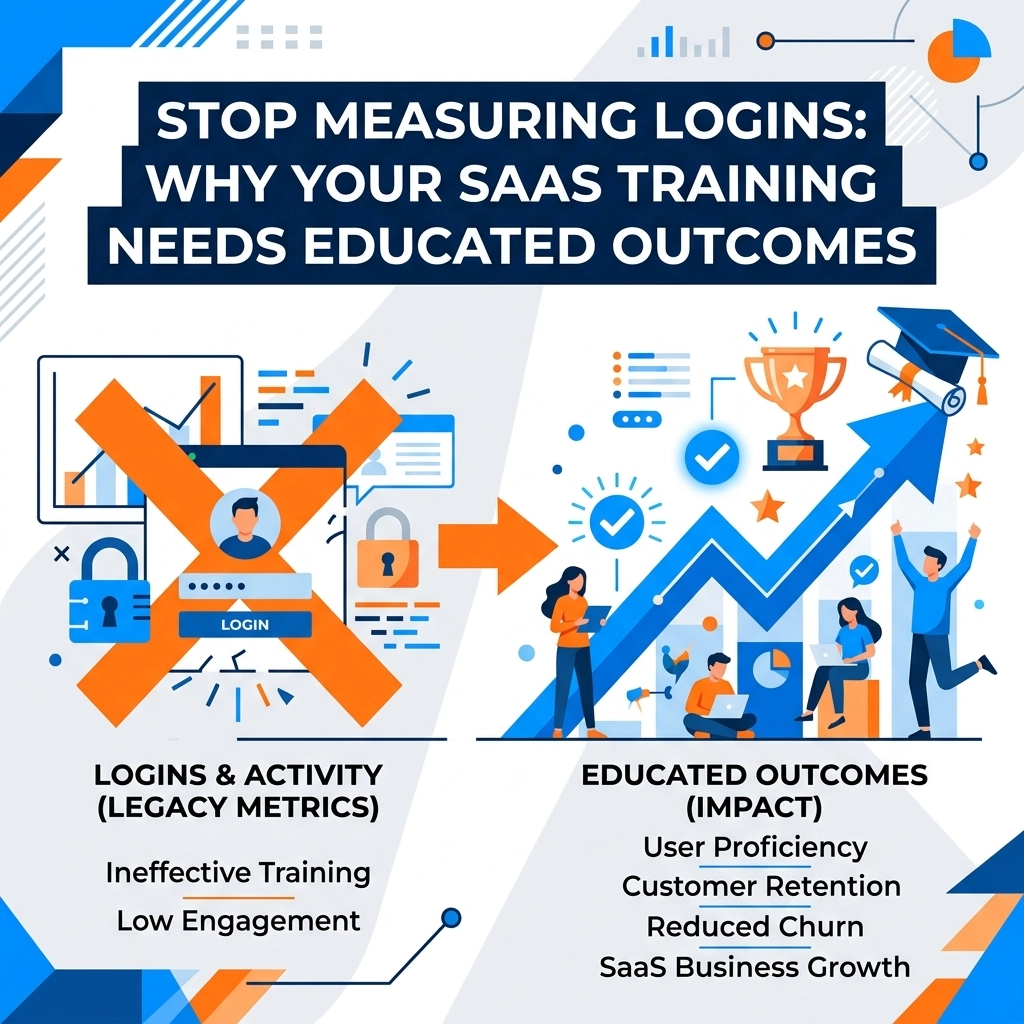
The Login Trap: Why Vanity Metrics Ignore Customer Education
Here’s the thing: logins are the ultimate vanity metric. They look great in a board deck, but they tell you absolutely nothing about customer health. Think about it, does a high login count mean the user is a power user, or does it mean they are struggling so hard to find a specific feature that they have to log in ten times a day? (Hello, endless support tickets!)
Traditional usage metrics often fail to capture the true reality of customer retention, especially for complex B2B platforms or “safety net” products. If you’ve built a cybersecurity tool, your customers might only log in once a month to check a report. Does that mean they’re about to churn? Not necessarily. If you’ve built a complex CRM, they might log in every day but only use 5% of the features. That’s where the danger lies.
When we focus solely on activity, we ignore the quality of that activity. Mastering customer education means looking past the “hit” and looking at the “impact.” Are they completing tasks? Are they reaching milestones? If they aren’t, those logins are just a countdown clock to a cancellation email.
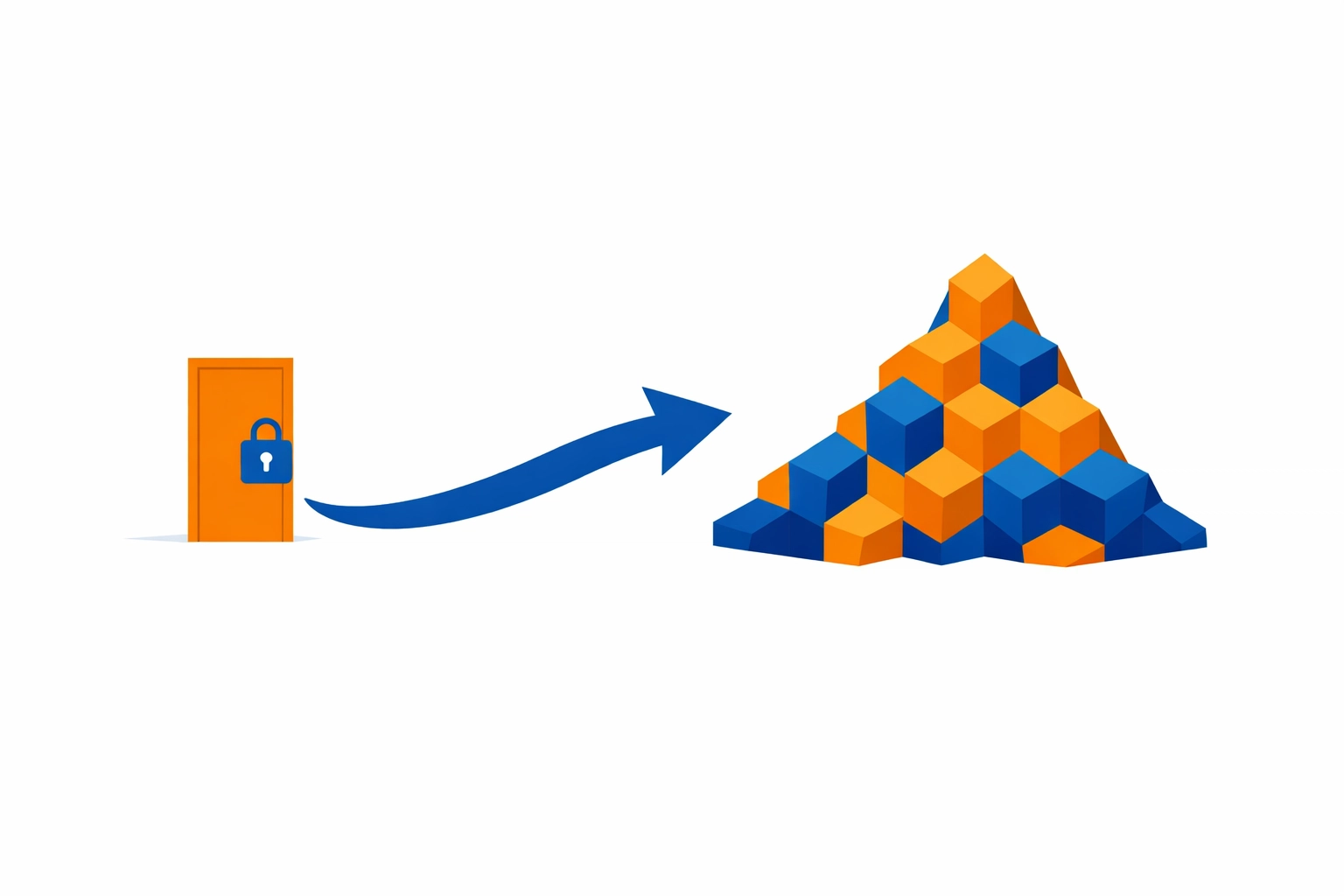
Alt text: A dashboard showing a shift from login charts to outcome-based customer education metrics.
Customers Buy Solutions, Not Just Features
Let’s talk about why people actually click that “Buy Now” button. Hint: It’s not because they wanted a cool new UI or a fancy “Export to PDF” button. Customers buy solutions to achieve specific business outcomes. They have a problem, maybe their team is inefficient, their data is messy, or their revenue is stalling, and they believe your software is the medicine.
When your SaaS training only focuses on “where to click,” you’re doing your customers a disservice. You’re teaching them the mechanics of the car without teaching them how to win the race. To drive real retention, your education strategy needs to be outcome-oriented.
Ask yourself:
- What does “success” look like for my customer’s boss?
- What is the specific ROI they need to prove to keep their budget?
- How does my product help them get a promotion?
Once you identify these outcomes, you can stop building “how-to” videos and start building custom eLearning development paths that lead directly to those goals. When a customer understands the deep value of your product and knows exactly how to apply it to their specific business pain points, retention naturally follows. They don’t just use your product; they rely on it.
Blending Customer Success with Strategic Customer Education
What’s the real impact of a Customer Success Manager (CSM) who spends 40 hours a week explaining the same basic features to different clients? (Hint: It’s burnout.) We see you, CSMs! You’re supposed to be strategic advisors, not human help desks.
The secret weapon for scaling your CS team is a robust customer education program. By blending these two departments, you turn your education content into a force multiplier. Instead of your CSMs doing the heavy lifting of basic training, your on-demand courses do it for them. This allows the CS team to focus on high-level strategy, account expansion, and relationship building.
To do this effectively, you need to move beyond a random library of videos. You need a structured approach. This is where instructional design models come into play. Whether you prefer the Interactive ADDIE model or the more agile SAM model, the goal is the same: create a learning experience that is intentional, measurable, and results-driven.
Building Maturity Models and Certification Pathways
So, how do you actually measure an “educated outcome”? You build a map.
A maturity model is a framework that outlines the journey from a “Novice” user to an “Expert” or “Champion.” Instead of tracking logins, you track where a customer sits on this maturity curve.
- Level 1 (The Rookie): Has completed basic onboarding and performed a “Quick Win” task.
- Level 2 (The Practitioner): Uses core features regularly and has integrated the tool into their daily workflow.
- Level 3 (The Expert): Utilizes advanced features, automations, and integrations.
- Level 4 (The Champion): Achieves measurable business ROI and advocates for the tool internally.
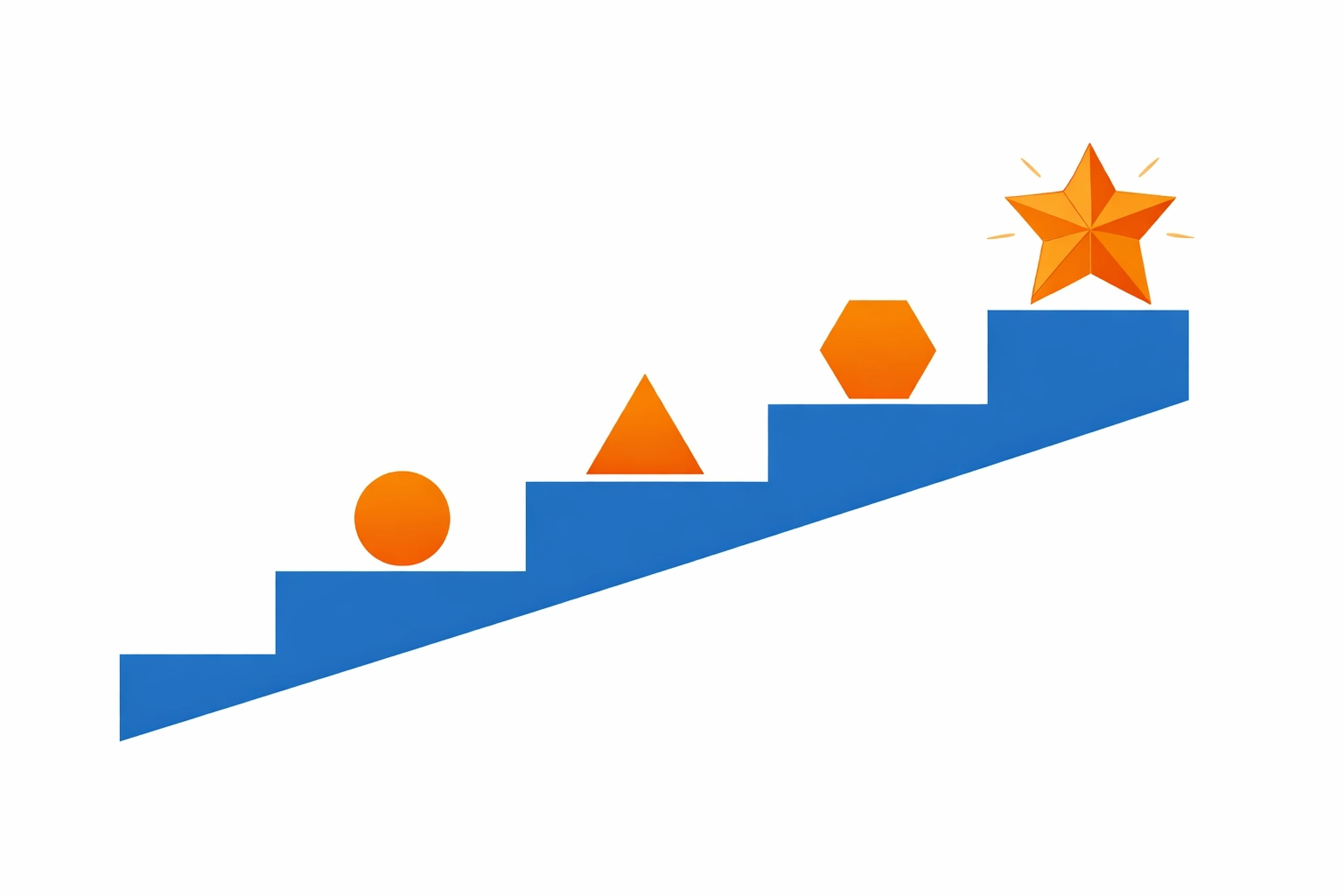
Alt text: A maturity model diagram showing a user’s journey through customer education milestones.
By creating certification pathways, you give users a “gold star” to aim for. Everyone loves a badge for their LinkedIn profile! But more importantly, these certifications prove that the user has the skills to get the most out of your platform. If a customer account has three “Certified Power Users,” the likelihood of churn drops significantly. You aren’t just selling software anymore; you’re building a skilled workforce that is tethered to your ecosystem.
Real Talk: Proving the ROI of Customer Education
Let’s face it, at the end of the day, you need to prove to your CFO that this investment in SaaS training is worth it. If you tell them, “Our users logged in 20% more this month,” they might shrug. But if you tell them, “Trained users have a 45% lower churn rate and a 2.3x better lifetime value,” you’ve got their attention.
Research shows that companies getting training right see:
- 67% higher feature adoption rates (because people actually know what the buttons do!).
- 40% reduction in support tickets (think of the time saved!).
- Significant increases in expansion revenue.
If you’re curious about how this looks for your specific business, check out our ROI calculator for training investment. It’s a great way to put real numbers behind your educational strategy and move the conversation from “cost center” to “revenue generator.”
Proactive Education: Moving From Reactive to Predictive
Customer Support is the fire department; they show up when things are already burning. Customer education is fire prevention.
When you shift to an outcome-based model, you can become proactive. By analyzing where users drop off in your training or which features are rarely touched, you can predict churn before it happens. Don’t wait for the “cancel” request. If a user hasn’t reached their “Level 2” maturity milestone within the first 30 days, trigger an automated educational outreach or a contextual in-app guide.
This proactive approach turns your training into a “success engine.” You aren’t just answering questions; you’re anticipating the hurdles your customers will face and giving them the tools to leap over them before they even break a sweat.
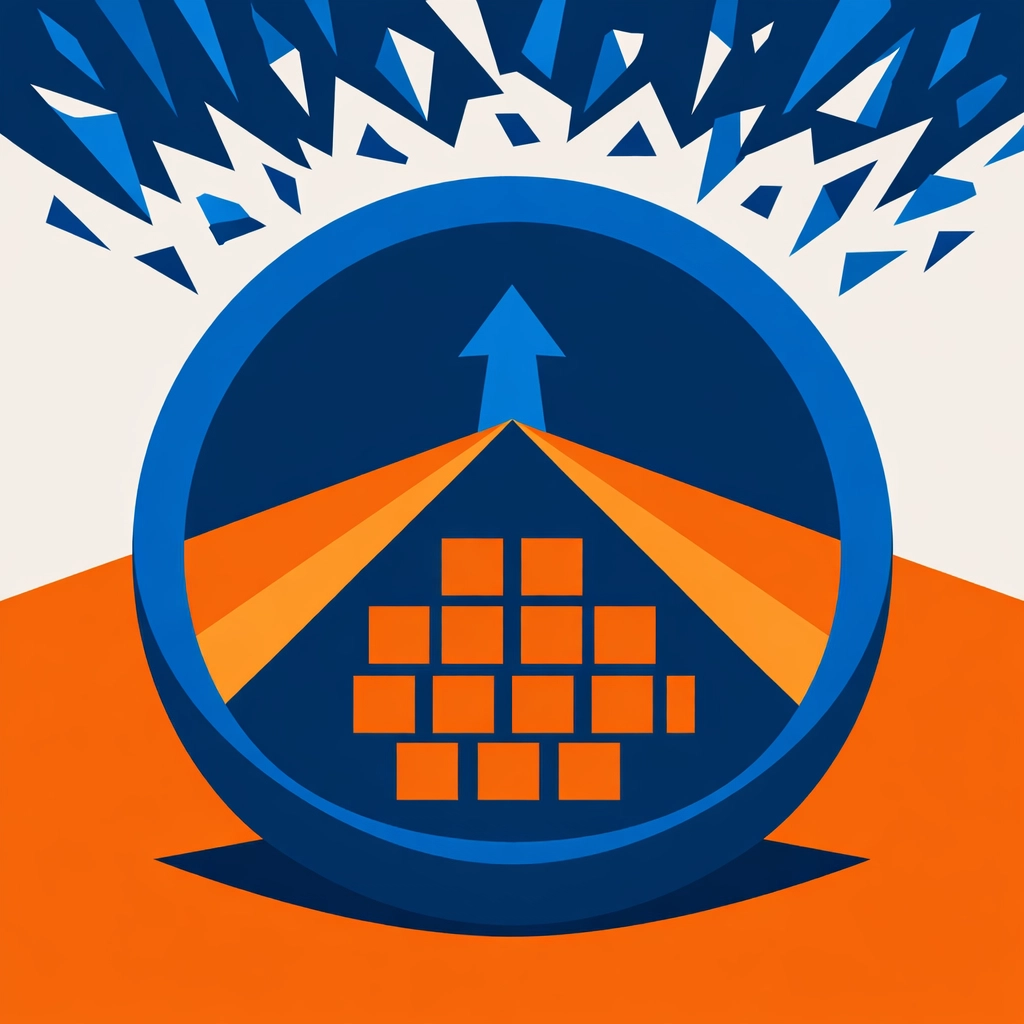
Alt text: A comparison graphic showing reactive support vs. proactive customer education strategies.
Start Small, Think Outcomes
Don’t feel pressured to build a 50-course university overnight. You don’t need a Hollywood production crew to start seeing results. Start by identifying the one “Aha!” moment in your product, the one thing that, if a customer does it, they are 10x more likely to stay. Then, build a short, punchy educational path to get them there.
Focus on the behavior change, not the video views. Ask yourself: “Did this training help them solve their business problem?” If the answer is yes, you’re on the right track.
Building a world-class education program is a journey, but it’s the only way to scale a modern SaaS business. If you need help figuring out the “how,” feel free to book time with Lokesh to chat about instructional design or custom development.
Stop counting the times they log in. Start counting the times they succeed. When your customers win, you win. It’s as simple as that. Let’s stop measuring activity and start measuring the impact that truly drives growth.