Effective customer education during the initial onboarding phase is the most powerful weapon you have to stop users from hitting that “cancel” button.
Let’s be real: most SaaS companies treat onboarding like a frantic IT project. They focus on API keys, data migrations, and checking permissions. But here’s the thing, while those technical hurdles matter, they don’t actually make a customer successful.
If your customer finishes “setup” but still doesn’t know how to solve their primary business problem using your tool, you haven’t onboarded them. You’ve just given them another login to forget. (Hello, endless Zendesk tickets and low adoption rates!)
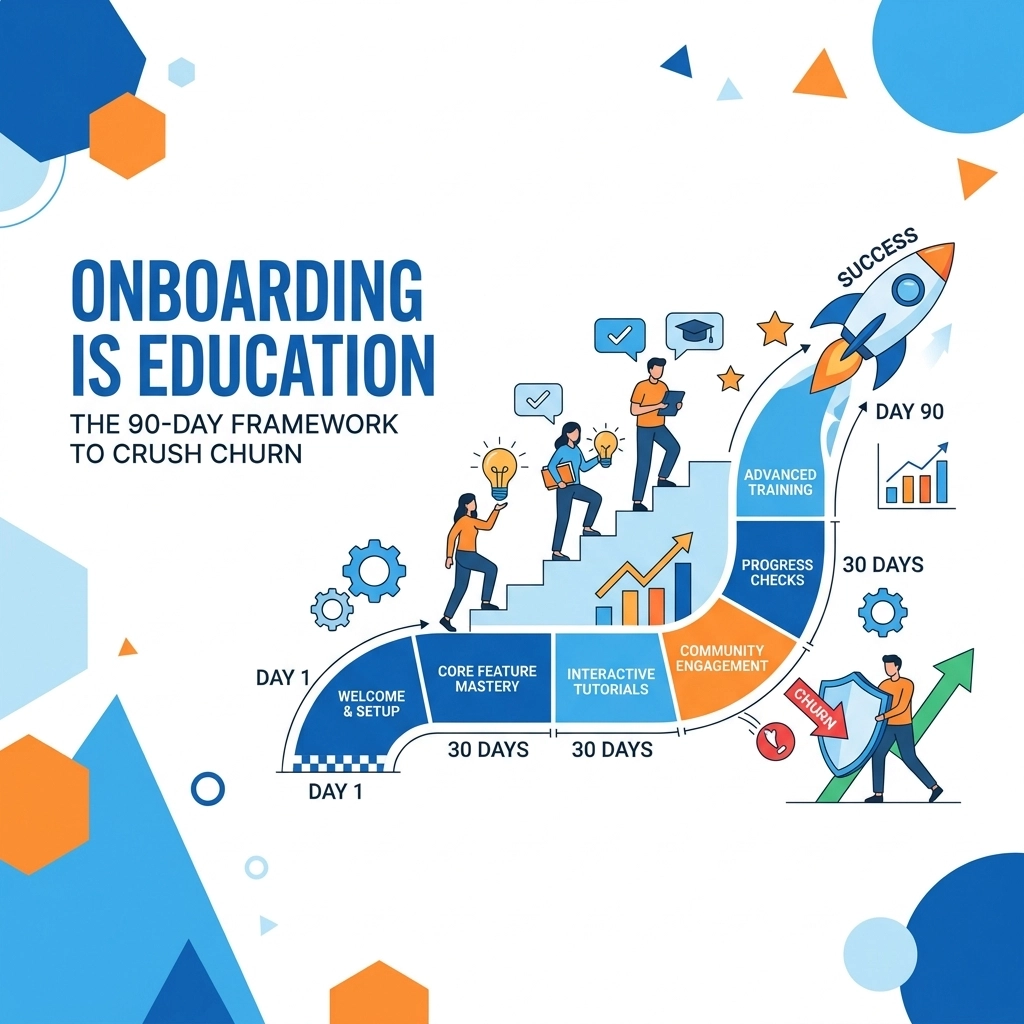
To truly crush churn, we need to shift our perspective. Onboarding isn’t a one-time technical event; it’s a strategic educational journey. At Check N Click, we’ve seen that the first 90 days of a customer’s journey are make-or-break. If they don’t see value quickly, they are already on the path to churn.
Why Traditional Onboarding Ignores Customer Education
Here’s the deal: traditional onboarding focuses on the “how-to-click” rather than the “why-it-matters.” We often fall into the trap of assuming that because a customer bought the software, they automatically know how to integrate it into their daily workflow. (Spoiler alert: they don’t.)
When you ignore the educational aspect of onboarding, you leave the customer to figure out the value proposition on their own. This leads to what we call “The Onboarding Gap”, the space between purchasing a solution and actually realizing its benefits. If this gap is too wide or too long, frustration sets in.
Instead of just getting them “live,” we need to focus on SaaS training that builds competency. We need to move beyond vanity metrics like “account activated” and look at “educational milestones reached.”
The 90-Day Customer Education Framework
What’s the real impact of a structured approach? Research shows that a 90-day framework can cut churn rates in half. By breaking the journey into three distinct 30-day phases, you provide a roadmap that guides the customer from confusion to mastery.
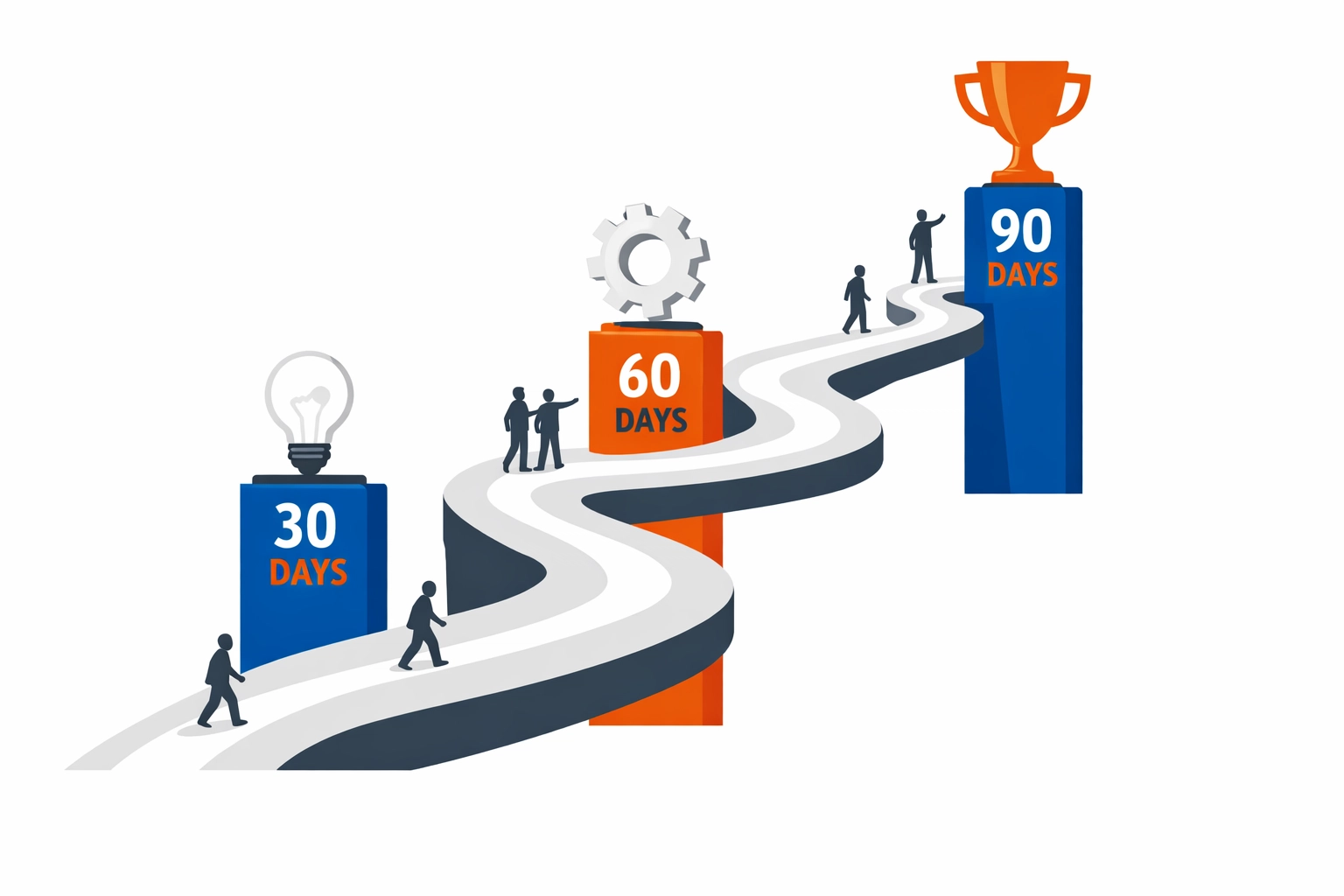
Alt text: customer education onboarding framework diagram showing the 30-60-90 day journey
Meta description: Master SaaS onboarding using a 90-day customer education framework to drive early feature adoption, reduce churn, and turn new users into experts.
Phase 1 (Days 1-30): Foundations and Quick Wins
The first 30 days are all about momentum. You want your customer to feel that “Aha!” moment as soon as possible. Don’t try to teach them every advanced feature yet; they’ll just get overwhelmed. (Think Netflix binge, but for learning, keep it light and engaging!)
Focus on:
- The Kickoff: Align on business goals, not just technical specs.
- Foundational Education: Use short, punchy videos to explain the core value.
- Securing “Quick Wins”: Identify one small task they can complete in week one that delivers immediate relief to a pain point.
By the end of Day 30, the goal is for the customer to say, “Okay, I see why we bought this.” If you’re struggling with why users aren’t engaging at this stage, check out 10 reasons your customer education isn’t driving feature adoption.
Phase 2 (Days 31-60): Habit Formation through SaaS Training
Once the “new car smell” of the software wears off, you enter the danger zone. This is where users often revert to their old ways of doing things. Phase 2 is about building habits and deepening feature adoption.
Focus on:
- Workflow Integration: Show them how your tool fits into their existing ecosystem.
- Intermediate SaaS training: Introduce features that save time or automate manual tasks.
- Progress Validation: Send them “Gold Star” reports showing how much they’ve accomplished in the first two months.
This is where instructional design becomes your best friend. You aren’t just dumping information; you are designing a curriculum that reinforces behavior.
Phase 3 (Days 61-90): Mastery and Expansion
By day 90, your customer should be a “Power User.” Now is the time to introduce the sophisticated use cases that make your product indispensable. This phase positions the account for future expansion and turns the customer into an internal advocate.
Focus on:
- Advanced Training: Dive into the complex features they were too busy for in month one.
- Certification Pathways: Give them a badge or a certificate. People love showing off their expertise on LinkedIn!
- Strategic Reviews: Move the conversation from “how do I use this?” to “what’s next on our roadmap?”
How Instructional Design Powers Customer Education
Why does this matter? Because without solid instructional design, your onboarding content is just a collection of random “how-to” guides. (And let’s face it, nobody reads the manual.)
Alt text: instructional design for SaaS training showing structured learning paths
At Check N Click, we believe that great customer education requires a blend of psychology and technology. You need to understand how adults learn (Andragogy) to create content that actually sticks.
Are you using the right models? Whether you prefer the classic ADDIE or the more agile SAM model, your onboarding needs a structured backbone. If you’re curious about which approach fits your team, take a look at our guide on choosing modern instructional design models.
When you apply professional design principles to your onboarding, you create a “lean-in” experience. Your users aren’t just clicking through a tutorial to get it over with; they are actively acquiring a new skill that makes them better at their jobs.
Scaling with Tech-Touch Customer Education
Let’s talk about the elephant in the room: headcount. You can’t have a Customer Success Manager (CSM) hold every single user’s hand for 90 days. It doesn’t scale. (We see you, overworked CS teams!)
This is where “Tech-Touch” education changes the game. By leveraging a robust customer education platform, you can deliver a high-touch feel without the high-touch cost.
Tech-touch strategies include:
- In-app guidance: Contextual “nudges” that teach users in the flow of work.
- On-demand webinars: Let users learn on their own schedule.
- Automated email tracks: Send the right educational content at exactly the right time in their 90-day journey.
Alt text: customer education scaling tech-touch through automated learning platforms
By automating the “basics,” your CSMs are freed up to be strategic advisors rather than human help desks. If you’re a smaller team, don’t worry: you can still scale your curriculum with a lean team.
Measuring the Success of Your Customer Education Strategy
How do you know if your 90-day framework is working? You have to stop measuring logins and start measuring outcomes.
What’s the real impact? Track things like:
- Time to First Value (TTFV): How quickly did they get that first “Quick Win”?
- Course Completion Rates: Are they actually finishing the onboarding modules?
- Feature Breadth: Are they using more than just the basic dashboard?
If you see a customer stalling at Day 45, that’s a proactive signal to jump in before they become a churn statistic. It’s about moving from reactive support to proactive education.
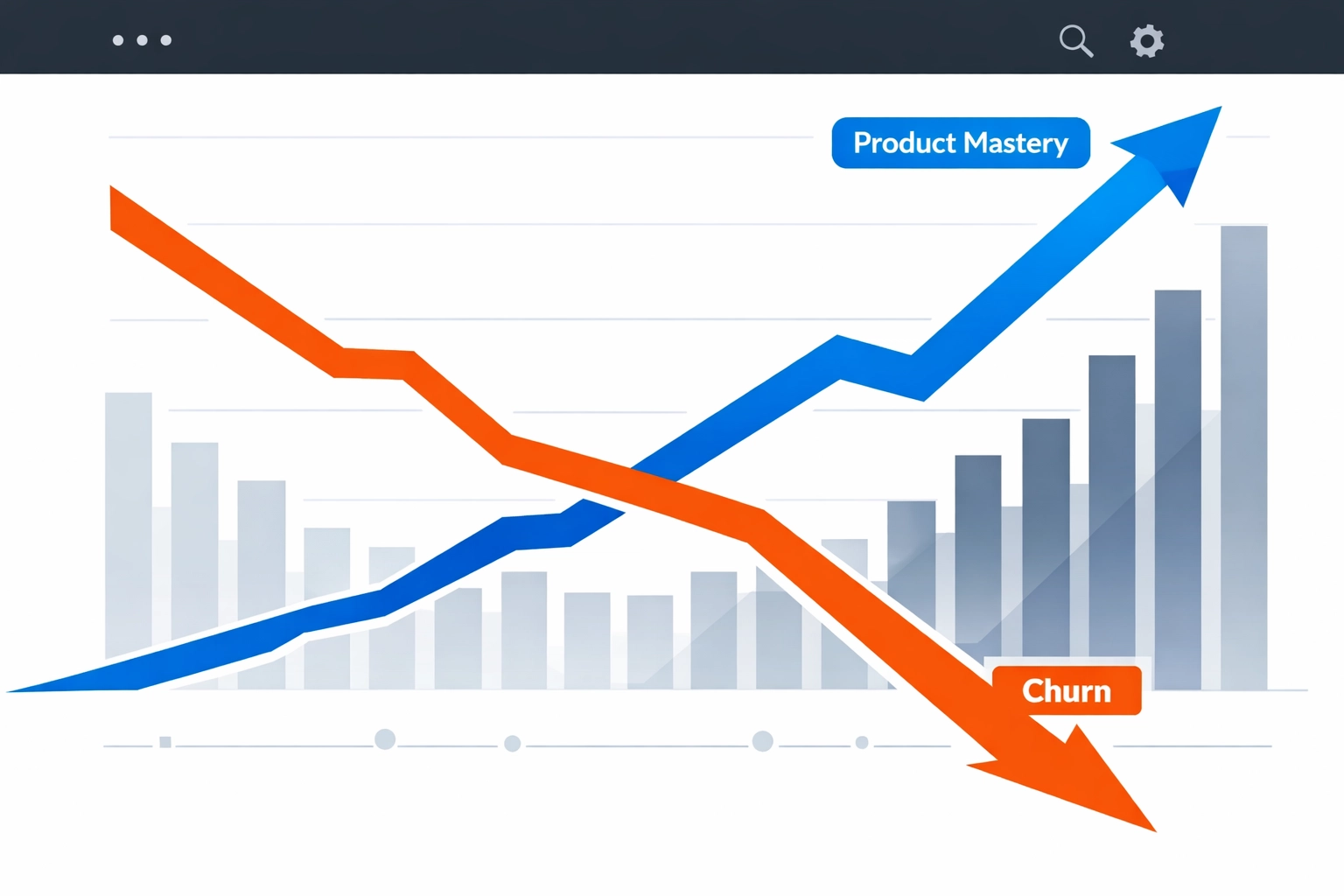
Alt text: customer education success metrics dashboard showing churn reduction
Real Talk: The 90-Day Journey Never Ends
Here’s the reality: while the first 90 days are the most critical, education is a continuous loop. As your product evolves and your customers’ businesses grow, their educational needs will shift.
But by establishing a strong foundation in those first three months, you build a relationship based on value and trust. You aren’t just a vendor; you are a partner in their success.
Don’t feel pressured to build a 50-hour university overnight. Start with the most common roadblocks and build from there. Focus on the learner, design for outcomes, and watch your churn numbers drop.
Are you ready to stop “setting up” and start educating? If you want to dive deeper into building a world-class program, check out The Ultimate Guide to Customer Training Programs in 2026.
Building experts is the best churn prevention strategy there is. When your customers win, you win. (And that’s a lot better than just getting them to log in!)