Effective capability building is the secret sauce that transforms a checking-the-box culture into a high-performance powerhouse. Let’s be real: we’ve all been there. You launch a shiny new training program, the dashboard shows a 98% completion rate, and you feel like a rockstar. You’ve got the data, the charts are green, and everyone gets a digital gold star.
But then, three months later, the “performance needles” haven’t moved an inch. Customer support is still drowning in the same basic questions, the sales team is still fumbling the new product pitch, and your ROI is looking more like “Return on Irrelevance.”
Here’s the thing, enterprise learning often confuses participation with proficiency. In their book B2B Customer Experience, Paul and Nicholas Hague talk about the importance of “Fulfillment.” If your training doesn’t actually help the customer (or the employee) do their job better, you haven’t fulfilled the brand promise. You’ve just wasted their time.
Ready for some real talk? Here are 10 reasons why your current approach is falling short and how to pivot toward true capability building.
![[HERO] Capability Building vs. Course Completion: 10 Reasons Your Enterprise Learning is Falling Short](https://cdn.marblism.com/ka9YBwVPZmM.webp "[HERO] Capability Building vs. Course Completion: 10 Reasons Your Enterprise Learning is Falling Short")
1. Vanity Metrics: Why Completion Isn’t Capability Building
Let’s talk about the elephant in the room: completion rates are a lie. Okay, maybe not a lie, but they are a massive distraction. (We see you, clicking “Next” as fast as humanly possible!)
When leadership looks at a dashboard, they see “100% complete” and assume the organization is ready for battle. In reality, completion often just signals compliance, not competence. Capability building requires measuring whether someone can actually execute a task under pressure, not whether they can pass a multiple-choice quiz after a 20-minute video.
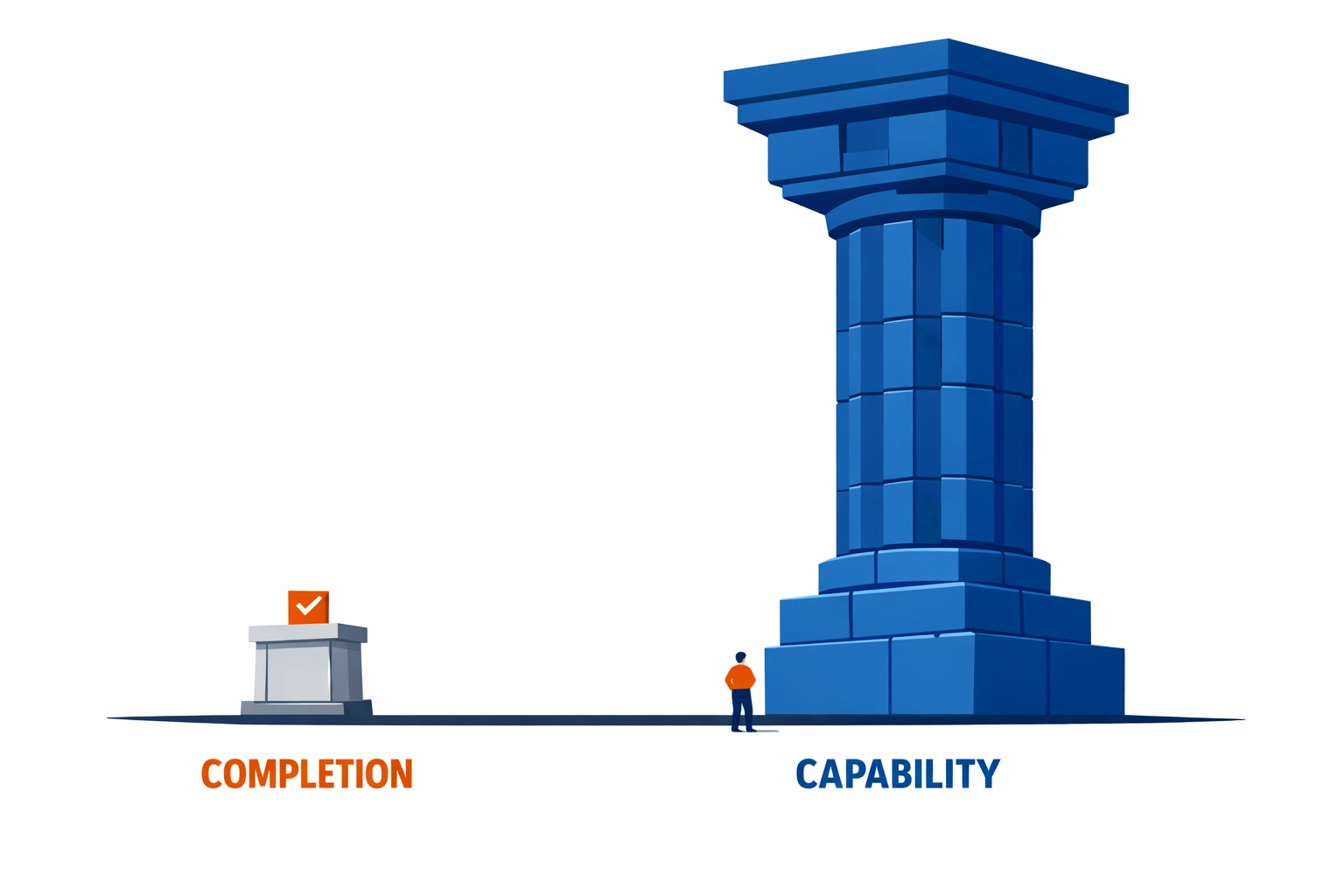
Alt Text: Capability building vs course completion dashboard for enterprise learning showing the gap between knowing and doing.
2. Lack of Fulfillment: Missing the Business Mark
In the Hague brothers’ framework, “Fulfillment” is one of the core pillars of a great B2B customer experience. In the world of enterprise learning, fulfillment means aligning the training directly with business objectives.
If your training team is building courses based on “what would be nice to know” instead of “what problem are we trying to solve,” you’re flying blind. Every piece of custom eLearning development should start with the end in mind. Are we trying to reduce churn? Increase upsells? Shorten the sales cycle? If you can’t link the course to a KPI, it’s just noise.
3. Static Content vs. Dynamic Microlearning Workflows
Here’s a reality check: nobody wants to sit through a 60-minute “Comprehensive Guide to Our Software.” (Think Netflix binge, but in a very, very bad way).
Modern capability building happens in the flow of work. Instead of one-off, static modules, we need dynamic microlearning workflows. This is where custom eLearning development really shines. By breaking down complex topics into bite-sized, actionable pieces, you allow learners to grab what they need exactly when they need it. It’s the difference between reading a manual and having a GPS.
4. The Silo Problem in Enterprise Learning
We get it, organizations are big and messy. But here’s the problem: the Product teams are building features, the Sales teams are selling dreams, and the Training teams are often the last to know.
When your training is siloed, it becomes outdated the moment it’s published. This disconnect is a major hurdle for skills-based learning. To build real capability, your learning strategy needs to be integrated into the product development lifecycle. If the trainers don’t talk to the developers, the learners are the ones who suffer.
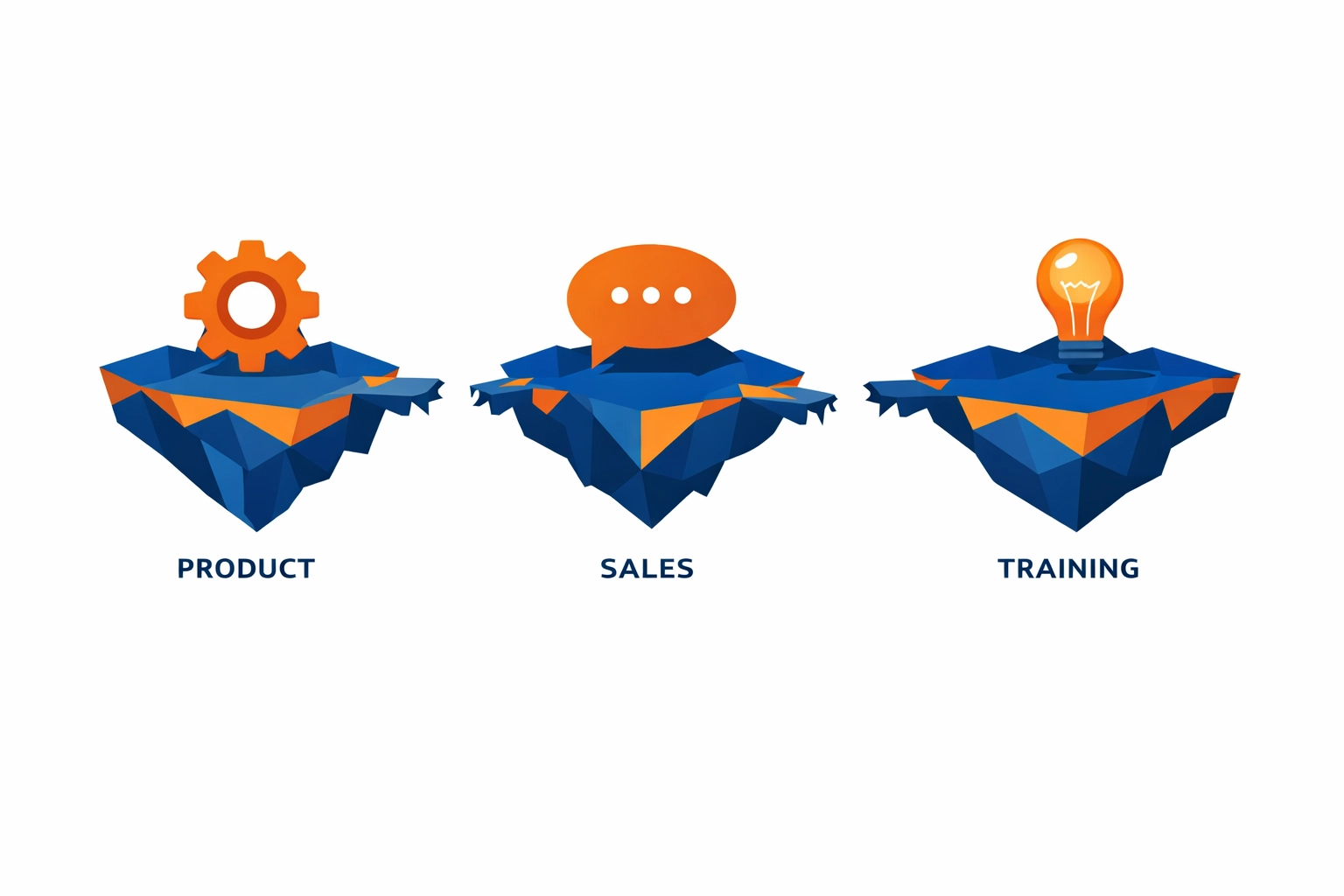
Alt Text: Instructional design silos in custom eLearning development showing the disconnect between departments.
5. Info-Dumping and Poor Instructional Design
Let’s face it: many “courses” are just PowerPoint decks with a “Next” button. This is the cardinal sin of instructional design.
True capability building isn’t about how much information you can dump into a learner’s brain; it’s about how much they can use. Effective design uses models like SAM (Successive Approximations Model) to iterate and refine the learning experience. If your content is boring, it’s not because the topic is dry, it’s because the design is lazy.
6. Legacy LMS: A Barrier to Modern Capability Building
Is your Learning Management System (LMS) from 2012? (Hello, clunky interfaces and Flash-based nightmares).
Many legacy platforms were built for tracking, not for learning. They are essentially filing cabinets for PDFs. To foster real capability building, you need a platform that supports social learning, AI-driven recommendations, and mobile accessibility. If the tech is a barrier, your learners will find a workaround (like YouTube or ChatGPT), and you’ll lose all visibility into their development.
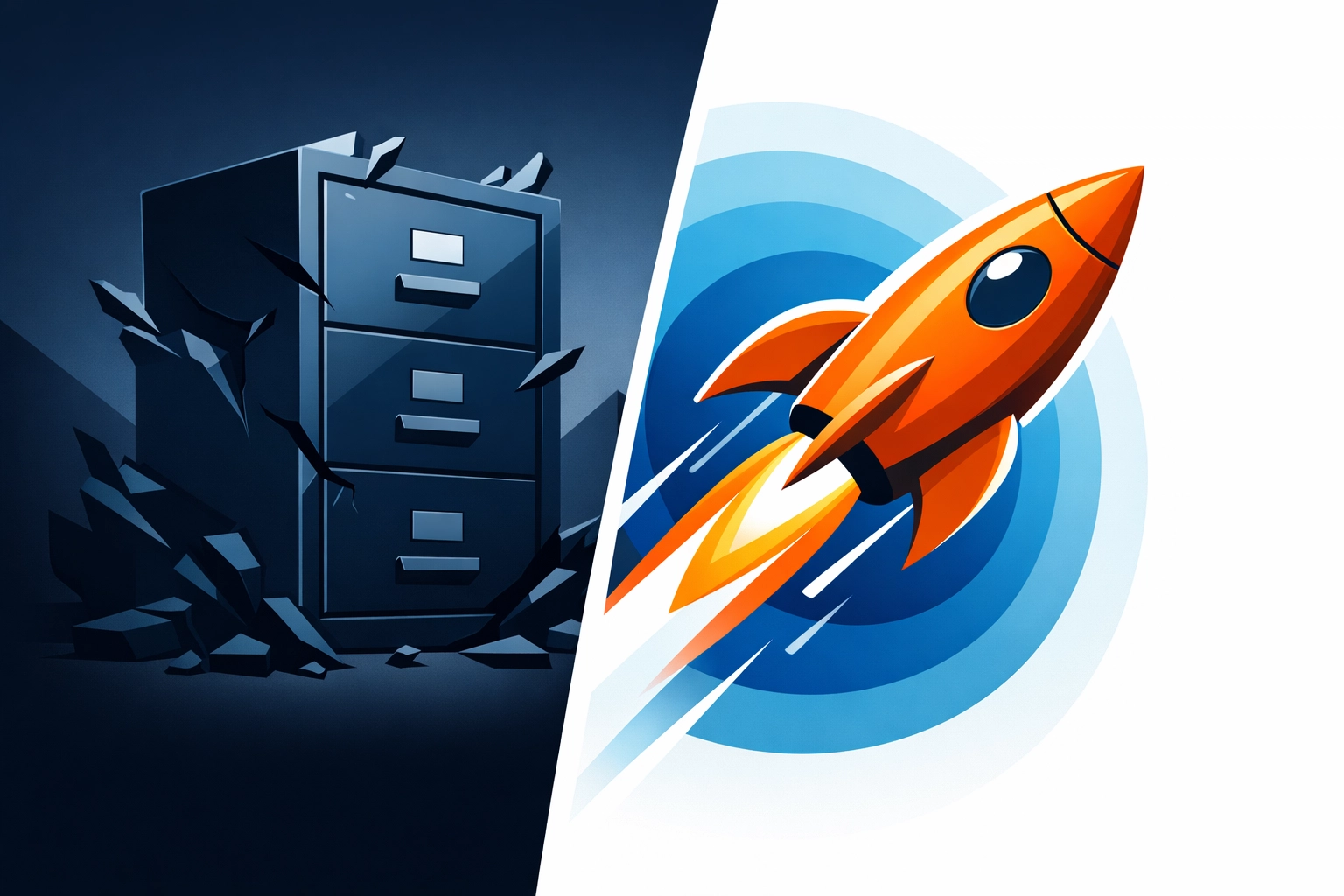
Alt Text: Legacy LMS vs modern capability building platforms showing the evolution of learning technology.
7. Personalization and AI-Driven Skills Paths
One size fits… absolutely nobody. In an enterprise setting, a junior developer has very different needs than a senior architect, even if they’re learning the same tool.
Why are we still forcing everyone through the same linear path? By using AI-driven skills-based learning paths, you can tailor the content to the individual’s existing knowledge and career goals. This not only speeds up the time-to-competency but also keeps engagement high because the content is actually relevant.
8. Failing to Measure ROI in Enterprise Learning
If you can’t prove the value, you’re always going to be the first department to face budget cuts. (Real talk!)
Measuring the success of enterprise learning requires moving beyond smile sheets and quiz scores. You need to look at performance data. Did the support tickets for “Feature X” go down after the training? Did the conversion rate go up? Use tools like an ROI calculator for training investment to get serious about your data. If you aren’t measuring ROI, you aren’t running a training program; you’re running a hobby.
9. One-Off Training vs. The Evolution Pillar
The Hague brothers also talk about the “Evolution” pillar, the idea that the B2B customer experience must constantly adapt and improve.
Learning is not an event; it’s a process. “One-and-done” training sessions are where knowledge goes to die. Capability building requires reinforcement, coaching, and a culture of continuous improvement. Think of it as an “Evolutionary” approach to education where the learning journey grows alongside the product and the industry.
10. Forgetting the CX: The Emotional Learner Experience
At the end of the day, your learners are humans (we hope!). They have frustrations, deadlines, and limited bandwidth.
If the learning experience is frustrating, confusing, or patronizing, it doesn’t matter how good the content is. A heavy focus on the B2B customer experience means treating your learners like customers. You need to reduce friction, provide value immediately, and respect their time. When the “emotional” part of the experience is positive, the “educational” part actually sticks.
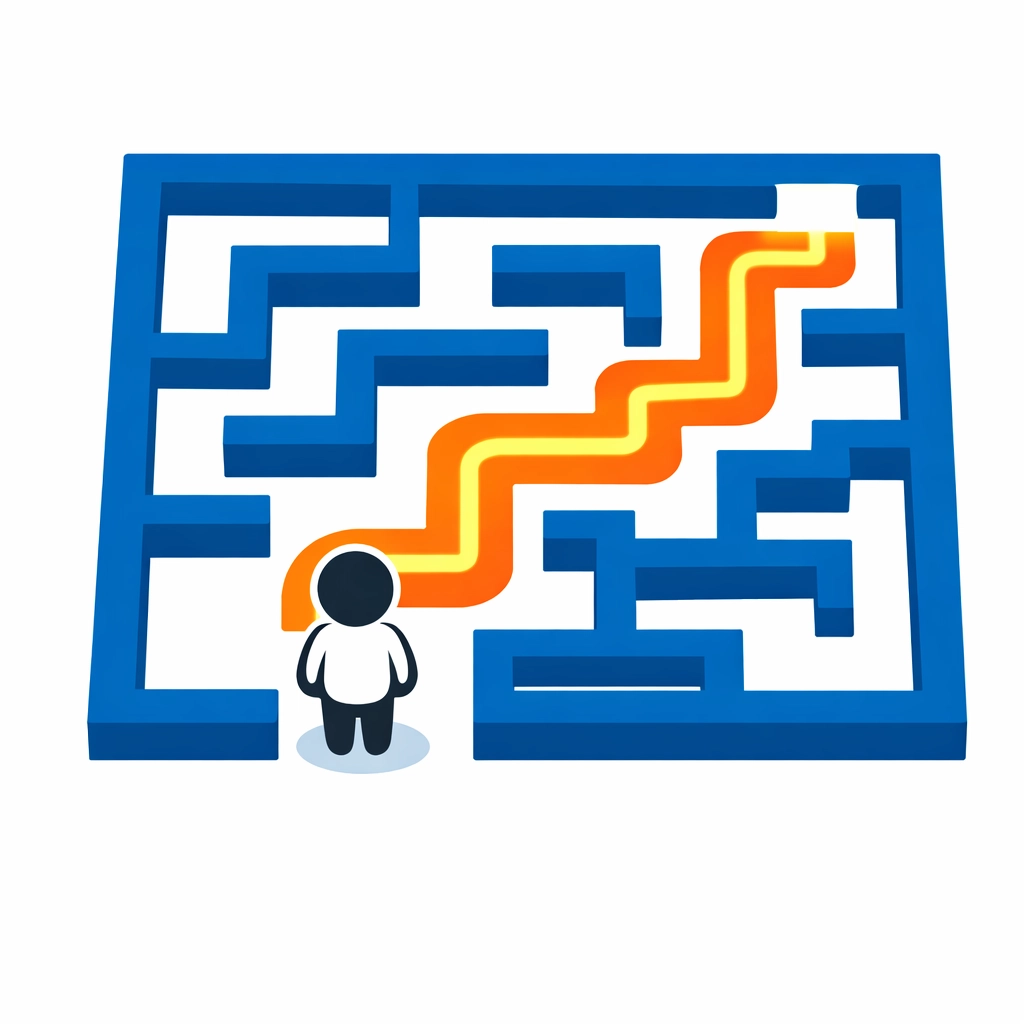
Alt Text: B2B customer experience journey in enterprise learning focusing on the learner’s emotional needs.
Mastering Capability Building with Check N Click
So, what’s the real impact? Shifting from a “Course Completion” mindset to a “Capability Building” strategy isn’t just about better training, it’s about better business results. It’s about fulfilling your brand promise and evolving with your customers.
But hey, we get it. Shifting an entire enterprise strategy is like turning an aircraft carrier. You don’t have to do it alone. At Check N Click, we specialize in helping organizations bridge the gap between “knowing” and “doing.”
Whether you need a full-scale overhaul of your custom eLearning development or just a fresh perspective on your instructional design, we’ve got your back.
Ready to stop chasing completion rates and start building real capabilities?
- Explore our Work Samples to see how we’ve helped others.
- Check out our Case Studies for the nitty-gritty details.
- Ready for a deep dive? Book time with Lokesh to talk strategy, design, or just how to make your learning programs actually work.
Don’t let your training be a footnote in a compliance report. Let’s make it the engine of your growth. Start with the “Fulfillment” your learners deserve!